
‘All we feel is panic’: Time to resurrect the creative project team
Storied creative and Mumbrella columnist Chas Bayfield opens the kimono on the insecurities and inefficiency of isolated global creative pitches.
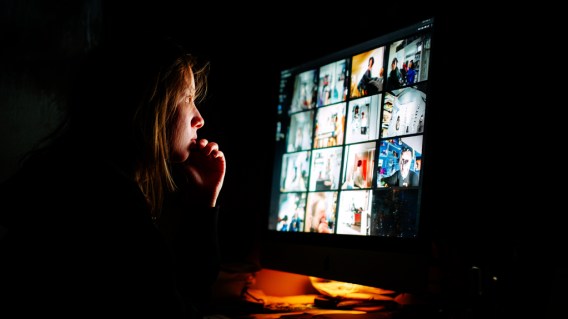
Get in quick: Chas Bayfield always pitches first on remote calls
Last year I worked on a number of projects for global ad agencies. All of these fit into a similar pattern. I am among a cartel of creatives who tip up to a Zoom call to share ideas with the wider team, none of whom are properly introduced and who may be CDs, strategists, account people or students on work experience. As I’m an old hand, when the project leader asks who wants to go first, I jump in. I prefer to present when everyone is still fresh, and not be team four. Also, if there are any duplicate ideas and I go first, mine is seen as the original.
I’ll be honest, my pet hate is listening to other creative teams share their ideas. Their scripts, activations and OOH don’t help me. They may help the agency, but that is not great news for me. Unless we are on some kind of “permalance” contract, it’s unlikely freelance creatives have strong feelings for the client, the agency culture, or the vibe. We are guns for hire. Mercenaries who write for money. We are also competitors to one another, not collaborators. So when the CD loves another team’s idea, all we feel is panic, and the fear of not being asked back next week.
Just as the chronically shy often flinch at the thought of group brainstorms (or even sitting in open plan offices), presenting in front of six other creatives adds another level of stress. You not only panic at being judged by your peers, you are giving away IP to your competitors while showing them the tricks of your trade. Added to this, sitting through an unspecified amount of ideas from multiple teams is insanely time consuming. Given the rule that 90% of everything is crap, that’s a lot of slurry.
A process that is truly appalling for creatives must make financial sense, otherwise agencies wouldn’t endorse it. Right?

Well, let’s look at that. Four teams on a project means eight people are getting paid, some employed, others freelance. Inevitably, only one team’s ideas can win, and the higher the number of teams, the more wastage. The agency is hedging its bets with a “safety in numbers” approach, the cost of which is marked up, then passed on to the client. In a parallel more cost-effective universe, that client could have hired a crack team of advertising experts for a fraction of the money they are paying the agency. So the system is great news for agencies, less so for the people who pay them.
I do grieve for a purer way of working. I was spoiled early in my career, landing my first job at HHCL, an agency which made a point of not just making better ads, but improving the way we worked as a company. We copied a process from Chiat Day in New York, and worked in “project teams”. This tight unit consisted of two creatives, a planner and an account person. One creative was responsible for words, the other pictures. The planner organised the strategy and the account director channeled everything to and from the client. These latter two were never referred to as “suits” as it was disrespectful.
Only when both of them liked the idea was it presented to the creative directors. If they gave it the green light and the client approved it, we brought in a producer. There were never more than five people who were ultimately responsible for overseeing campaigns for cars, airlines, beers and phone companies. The rule was that if a creative team couldn’t crack the brief, they should find work elsewhere. We lived and breathed the products we advertised. We were invested in them. Nothing was shared with a CD until the whole team was happy with it. The work was “ours”, not “mine”.

The author Chas Bayfield
Since then, I have been brought into agencies multiple times to recreate Blackcurrant Tango St George. Much as I’d like to take the credit for that ad, it was a typical HHCL team effort. The client was so involved that he became – and still is – a friend. Blackcurrant Tango was created by a process, an agency approach that valued everyone’s input. It was never just a script that was dialed in and presented to a roomful of execs in competition with a bunch of other creatives. It was a working relationship built on trust and respect.
One of the many upsides of the project team system was the sheer volume of work I produced in the 1990s. Compare that to now: in the past year, seven agencies have paid me to create work that went nowhere. The brief changed, the client decided they could create something internally, the CD went with their own work, or the project was cancelled. Meanwhile, legacy agencies are being criticised for being slow and inefficient, and their stock is falling.
I cherished the few projects last year that involved me, an art director and a client. I don’t believe that the project team is broken. I think that resurrecting it can lead to more empowered creatives, better work and lower overheads. I’m not convinced such a team needs to live in an agency, or even have its members in the same country. One planner. One account person. Two creatives. One producer. Pick the right people to make up that team and you may not need an agency. You are the agency.