
An open letter to audio nerds

Freelance podcast producer, editor and consultant Stuart Buckland encourages the little guys and girls of audio to enter the Australian Audio Awards.
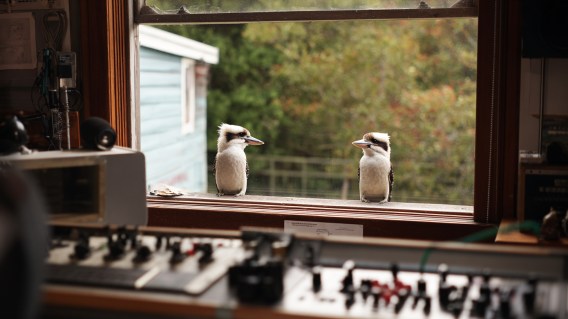
Hey, you there! Yes, the audio nerd pouring all of your creative heart and soul into your indie podcast or community radio program – I see you there. Hours spent writing, recording, finding and booking guests, or figuring out how to remove the chorus of kookaburras from that vocal track.

You do it because you love the craft … but wouldn’t a little recognition be nice?

Audio creators in our country now have the Australian Audio Awards, a new home for recognising great work done by podcast and radio creators.

Enter the awards here.

As an audio nerd myself, I am excited by the idea of a combined radio and podcast awards run in Australia by people who care about the growth and integrity of the industry here. Entries are open in a multitude of categories now and there is certainly one that suits your show.

I can guess what you may be thinking though; “What’s the point? I’m just one person, I can’t compete with big companies!”

That’s a rational fear, for sure. Going up against big companies — with their fancy offices, talented employees and something called a “budget” – can be intimidating. But don’t fret! The clever people at RadioInfo and Mumbrella have anticipated this situation and factored it into how the awards will be judged.

Judging in the podcast category has a two-level system: major and independent. This means you will be going against people at the same resource level as you. The definition of independent in the podcast section is “A small production company with 5 or less staff and producing less than 5 podcast series per year”.

Making the judging process fair for shows and creators of all types is important to the team behind the Australian Audio Awards.

As Chair of the Judging Panel Steve Ahern says:

The intention behind having two levels is to give independent small production companies a chance to compete against each other but not against big corporate podcast businesses with more staff and resources than they have. I had lots of talks with people in the independent podcast production sector and we reached a definition that can take in as many small producers as possible.”

The same ethos applies on the radio side, with judging broken up into three sizes: large, medium and small, so you community radio folks can feel the same sort of assurance that you are going against shows in your sphere of financial resourcing (or lack thereof).

As someone who has worked at a big media company, a small agency and then just myself (I choose to see the dwindling number of workmates around me as a consequence of circumstance rather than any personality or hygiene issues on my part), I can say that putting together awards submissions requires the same effort and skill no matter what the team size around you. So, a few tips for your submission from me:

  1. Allocate the time and effort you put into creating your submission appropriately

When you start an entry, you will see the breakdown of scoring percentages for the written component. Try to spend the right amount of time and effort on each bit of the entry. If one element of the entry is worth 10% but you spend 40% of the time you have to do your entry on it, you may end up lacking in other, more valuable parts of your submission.

  1. Get some ears on your audio section.

You put together an audio demo of up to 10 minutes to accompany your submission, so it is important the you pick content that is both representative of  the spirit of your show but also aligns well enough with what you have in the written part of your submission. It is important to try and get a couple of people (the less familiar with your show, the better) to have a listen to your demo to see whether things are coming across as well as you want them to be. As the creator who lives and breathes the show, it is easy to make assumptions about how easy it is for others to pick up what you take for granted about your show.

  1. Be yourself!

Don’t fall into the trap of trying to write in an overly formal manner with your entry. You are the force behind your show and what makes it great, so write as yourself rather than some Wodehouse-style fop. The jury want to have the best sense of who you and your show really are.

Do you need another carrot to enter? Ok, how about the fact that the winner with the highest score will automatically be entered (at no cost to the entrant) in the international New York Festivals awards? Does that do it for ya?

Independent shows have just as much chance of impressing the jury as big team shows. It is about innovation and impact – what are you doing that makes you stand out and provides something unique. You don’t need a big team to have an amazing show – skill, talent and dedication to craft will shine through – but it can’t if you don’t put an entry in.

Entries close March 6 — so get cracking!

Get the latest media and marketing industry news (and views) direct to your inbox.

Sign up to the free Mumbrella newsletter now.

"*" indicates required fields


SUBSCRIBE

Sign up to our free daily update to get the latest in media and marketing.