
Cultured masses: Ritson on the great yoghurt shortage of 2026
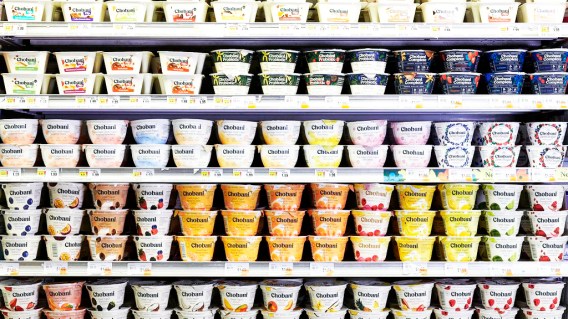
Last Tuesday, somewhere between Sydney’s Bondi Junction Woolworths and a Tiktok rabbit hole, something happened to the Australian yoghurt aisle. It vanished. Not metaphorically. Literally. Shelf after apologetically signposted shelf emptied to its white carcass. A nation that once fretted about avocado prices is now, with equal frenzy, refreshing the Coles app at 7am hoping Chobani is restocked before school pickup.

The struggle is real. Coles, Woolworths, and Aldi have issued statements last week acknowledging they are working with suppliers to manage the crisis. “Despite our suppliers increasing production to keep pace, current demand continues to exceed supply.” The shortage, which began in earnest in late 2025, is now entering its fourth month. Inner-city stores are hardest hit. If you’re shopping after 4pm in Surry Hills or Fitzroy, consider buying a dairy.

Five factors collided to create this mess. The first is protein-maxxing – a social media phenomenon in which Tiktok influencers promote high-protein diets as the solution to everything from weight loss to mood change. High-protein Greek yoghurt sits at the centre of this movement. Dr Fiona Willer, president of Dietitians Australia, noted diplomatically this week that the human body’s protein requirements have not suddenly increased. But an internet of idiots disagrees, and the internet of idiots always wins. It is, like the product at the heart of all this, a culture thing.

The second colliding trend is even sillier and more acute. A rando in Japan noticed that if you wedge sablé biscuits into Greek yoghurt and refrigerate it, you get something vaguely resembling cheesecake. I know, I know. But within weeks Australian micro-influencers were plunging Tim Tams into Chobani like there was no tomorrow. The #japaneseyoghurtcheesecake trend now has millions of views and thousands of empty yoghurt pots in its wake.

Cheesecake hack: Biscoff and frozen yoghurt

Next, we make our monthly visit to the Ehrenberg-Bass Institute for a brief moment of worship at the altar of mental availability. The Institute has spent the best part of two decades establishing that being salient — the thing a consumer thinks of first in a purchase situation — is one of the most powerful drivers of brand choice and category demand. Salience sells. And right now, Greek yoghurt has the mental availability of a Kardashian.

Every news story about the shortage, every TikTok of someone panic-buying Chobani, every conversation at the school gate about empty shelves – all of it is basically promoting it. People who hadn’t thought about yoghurt in months are now thinking about it constantly. And some of them will buy it. Not because of the shortage but simply because yoghurt is, suddenly and insistently, in their heads.

And then there is the strangest factor in all of this. You are reading this article about a yoghurt shortage. Thousands of other Australians will read something similar today. And a certain percentage of them — more than you’d think — are going to go to the supermarket tonight and try to buy yoghurt. Not because they want yoghurt. Not because they have a need for it. Not even because they thought about it. But because they’ve just been told there isn’t enough of it.

This is the scarcity effect. Cialdini documented it decades ago: humans are psychologically wired to assign greater value to things perceived as rare. When we learn a product is in short supply, we want it more. When we see an empty shelf, we interpret it as social proof that the product must be good – everyone else is buying it, so it must be worth having. Behavioural researchers call the downstream effect “demand-generated scarcity”. The shortage creates the story, the story creates more demand, the demand deepens the shortage. It becomes self-reinforcing. The irony thickens, much like the product at its centre.

The old scarcity trick: One among many in Robert Cialdini’s book Influence

A final mechanism works alongside scarcity: anticipated regret. Economists and psychologists have documented that humans are disproportionately motivated by the fear of missing out relative to the pleasure of having. If you don’t buy the yoghurt tonight and find yourself without it next week, you’ll feel worse than you would have felt had you never heard of the shortage. That asymmetry drives people to stockpile. During Covid it was toilet paper. In 2026 it is Greek yoghurt.

The bandwagon effect amplifies all of this just a little bit more. Pictures of empty shelves circulate on Instagram and Reddit. People share screenshots of the Coles notice. Every piece of shortage content – including, yes, this column – adds fuel. Demand doesn’t just rise linearly; it compounds. Panic buying spreads the way yoghurt itself works – through live cultures, multiplying rapidly in warm conditions. This is how a viral food trend that began with some nutcase in Tokyo jabbing his biscuits into a Mueller Light becomes a four-month supply crisis in the dairy aisle at Waringah.

In a classic market, a demand surge combined with a supply reduction should produce higher prices. That’s not some arcane theoretical proposition — it’s just supply and demand doing what supply and demand does. When more people want something and there’s less of it, the price usually goes up. Australia’s egg market demonstrated this perfectly over the last three years. Supply was constrained. Demand rose. Egg prices more than doubled. Markets are efficient.

So, the same thing will now happen with yoghurt, right?

Ritson: Doing his bit to exacerbate the yoghurt shortage

Right?

The situation is, and I’m sorry about this, very strained. Prices haven’t budged despite the shortages. Woolworths actually locked in a price cut on Greek yoghurt last year — the 1kg home brand dropping from $4.20 to $3.80 — as part of its much-publicised price war with Coles. Both retailers are running their standard promotional programs. Neither is raising yoghurt prices in the face of the most dramatic demand surge the category has seen. You can’t buy the product, but if you could, it would be at a super cheap price.

What?

As you may recall, Coles and Woolworths spent the better part of the last three years doing precisely what the economics of an oligopoly allows: quietly, methodically, and at times egregiously hiking prices on everyday groceries. They raised prices, then raised them again, then put a cheerful red discount ticket on the shelf and told shoppers they were getting a bargain. The ACCC found out and both are now in various stages of federal deep shit. The government, with impeccable comedic timing, has scheduled new price gouging laws to take effect in July 2026.

Coles and Woolworths –- who between them sell around 80% of the nation’s yoghurt — are legally, politically, and reputationally incapable of putting up prices. Amanda Bardwell and Leah Weckert are not stupid women. They know exactly what happens if they raise yoghurt prices while shelves are empty and journalists are writing about a shortage with a Federal Court proceeding running hot in the background and new legislation less than six months away.

They’d be crucified. So they absorb the shock, swallow the margin hit, and successfully, sub-optimally sell out of yoghurt by 8am every day. They are both hostage to their own history. The supermarkets that spent years pricing up on a whim are now forbidden from doing so when a legitimate occasion finally arrives. There is a word for this. Several, actually.

The shortage will ease. It always does. Supply catches up with demand. The Japanese cheesecake trend will crest and roll back, as viral food trends always do. Some younger sibling — the fibre-maxxing movement, perhaps – is already beginning to draw away a portion of the protein obsessives. Normal service will be resumed in the yoghurt aisle, probably by mid-year.

The Great Australian Yoghurt Shortage of 2025-2026 was not really about yoghurt. It was a stress test of pricing power in a duopoly under maximum regulatory pressure. Woolworths and Coles failed it — or passed it, depending on which way you look at these things. They kept prices flat when economics said raise them, because politics said they couldn’t. The companies that truly demonstrated pricing power during this period are the egg farmers and specialist supplement brands who now charge $80 for a kilogram of protein powder. Whey more than it used to be.

Meanwhile, every SBS article, every Reddit thread, and every Mumbrella column written about the shortage is busily recruiting new yoghurt buyers who weren’t even thinking about the stuff but who are now making a mental note to add it to their shopping list. Admit it. Demand-generated scarcity, amplified by media coverage, compounded by the fear of missing out, bolstered by basic salience, promoted by an unknown Japanese blogger and an unfounded belief that protein will make it all better – works.

Mark Ritson is a professor, brand consultant and award-winning columnist. He is the founder of the MiniMBA in Marketing – the program that has trained more than 40,000 marketers across 40 countries. Pricing power is one of its module topics. www.minimba.com

Get the latest media and marketing industry news (and views) direct to your inbox.

Sign up to the free Mumbrella newsletter now.

"*" indicates required fields


SUBSCRIBE

Sign up to our free daily update to get the latest in media and marketing.