
Government flags change to copyright laws to accommodate AI
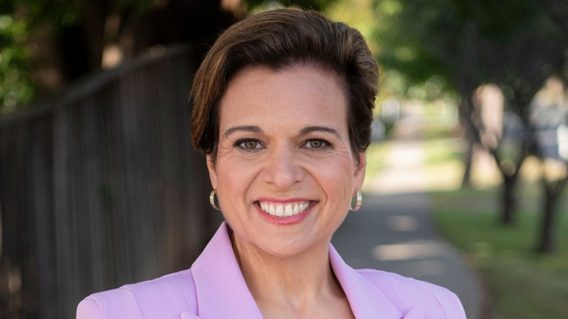
A few AI tweaks on the table: AG Michelle Rowland
Attorney general Michelle Rowland has given a cautious signal that the government is considering copyright change in the face of AI.
The former communications minister told the AFR that while there would be no less protection for copyright holders, the government “was looking at other ways in which the copyright system can be improved in the age of AI.”
The statement, coming a week after a lobbying visit to Canberra from Anthropic CEO Dario Amodei, was received with caution by publishers and copyright groups.
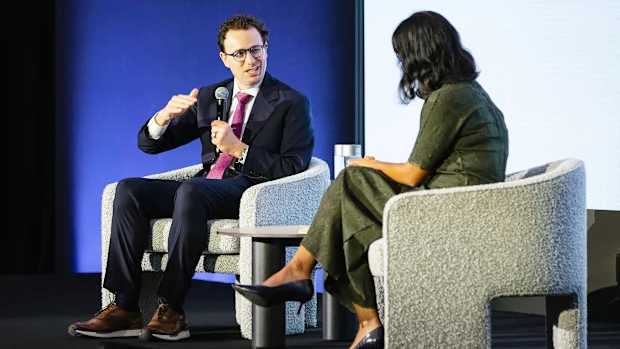
Dario Amodei in action in Australia last week (Futures Forum)
“We all want to get to the same endpoint here,” Rowland told the AFR.

“And that is, we do want to realise the benefits of innovation and the benefits that AI can bring to productivity. But we also need to recognise that our creative industries, our media, our artistic ventures in this country, they are the lifeblood of our culture and of our economy, and we will not be selling them short.”
The issue of Australian copyright law and its alleged unfriendliness to AI data centres became a talking point last year after Atlassian co-founder Scott Farquhar used a National Press Club address to call for change. Farquhar, as chair of the Tech Council of Australia, said that Australia was missing out on billions in investment because there is no “text and data mining” (TDM) legal exception in Australia.
However, publishers and copyright owner bodies have argued vigorously that Australia should not change copyright laws, pointing out that AI labs have already been involved in widespread rights violations in training models. They say that AI labs are able to strike collective and individual deals with rights holders.
Responding to Rowland’s most recent comments, Copyright Agency CEO Josephine Johnston said her organisation appreciated the attorney general’s “continued support for Australia’s creative industries at a time of unrelenting pressure from big tech.”
“Australia already has a practical solution available to the tech sector: collective licensing, which enables AI developers to obtain licences for content from a multitude of rights holders efficiently while ensuring creators are paid,” she said.
APRA public affairs executive director Nicholas Pickard told Mumbrella in a written statement that the government’s industry consultation process was “proceeding exactly as the Attorney-General has outlined”.
The next step was to get transparency right.
“Platforms should be required to disclose what copyright material they are using to train their AI systems. That is not a radical proposition. It is the precondition for any serious licensing negotiation,” he said.
“Right now, these platforms are hiding. There is no obligation to disclose what they have taken, from whom, or at what scale. Creative content is not optional for these businesses; it’s the essential ingredient. We are ready to negotiate. The question is whether the platforms are.”
Also in a written statement, Nine CEO Matt Stanton said: “The government has been clear that strong copyright protections are the bedrock of intellectual property and its fair use in Australia, and we support that position.”
“Our door has always been open to reach agreements for the legal and appropriate use of our quality journalism and other content we invest in creating. The equation is very simple: if you want to use our intellectual property for your commercial benefit, then pay for its commercial value.”
Meanwhile, News Corp Australasia executive chairman Michael Miller’s statement said Rowland was “right to call our creative industries the lifeblood of Australia’s economy”, but noted that a “gap is widening between acknowledging rights holders in principle and protecting them in practice.”
“The creative sector needs AI companies to commit to licensing,” he added. “We will not be able to grow productivity if the value of Australian content is celebrated in speeches but bypassed in the business models of AI companies. This must mean ensuring that those who use our work pay for it.”
One headline, two literals. Is your spellchecker on holidays?
Thanks for flagging, Anon – fixed!
Tim – Mumbrella