
Uncomfortable truth: ‘Make It Shitty’ works, most B2B advertising doesn’t

The Norwegian Consumer Council’s viral ‘Make It Shitty’ campaign challenges the clichés, outdated assumptions and risk-aversion that keep B2B marketing stuck in the same tired playbook.

According to Sickdogwolfman’s Laura Agricola, B2B advertising is “like an airline where three out of four planes never land.”
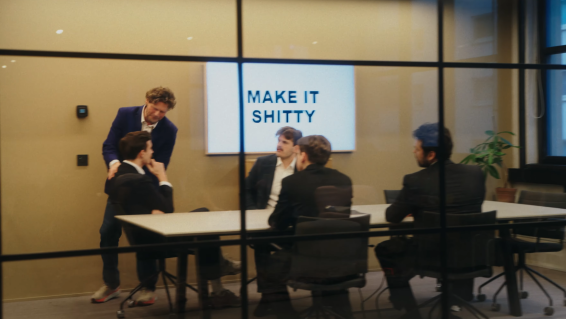
As Dr Mumbo featured on Wednesday, the Norwegian Consumer Council has made a wonderful new ad called “Make it shitty”. It spoofs “enshittification”, a term coined by Canadian journalist Cory Doctorow to describe how digital platforms gradually deteriorate once users are locked in.

It swears a lot. In fact, the word “shitty” is the core device of the ad. It bluntly satirizes corporate behaviour. “Yep, we make it shitty for you”. It entertains without telling the audience what to do or think.

And it comes from a policy-focused organisation whose job is to influence authorities and businesses, which is something similar organisations in our part of the world rarely attempt so directly.

Over 20 years, I’ve worked across most of the acronyms — B2C, B2B, B2B2C, B2G, B2E, D2C — but it’s really the B2B tropes, and that corporate-voicemail tone, that slowly ground my soul into powder.

The process usually went like this.

A brief arrives. It asks for a point of view that is different. Something that communicates the brand’s unique value. Great.

So we go away and do the work. Try to find something that is actually true. Something distinctive against the competitive sameness. Nice ambition. Wrong universe.

Because what eventually makes it through is always, and I mean always, some variation of the same ideas:

  • Your dedicated partner
  • The one-stop shop
  • Seamless integration
  • Customer-first approach
  • Trusted expertise

It’s not a matter of opinion that those tropes are hogwash.

Research from the Linkedin B2B Institute and System 1 found that 75% of B2B advertising fails to drive long-term growth. That’s like an airline where three out of four planes never land.

So why does this pattern keep playing out?

Much of it is built on an outdated assumption: that B2B buyers are purely rational decision-makers and that humour or emotion somehow undermines credibility.

A 2025 paper titled “To humor or not humor buyers?” notes that many B2B marketers still believe humour is inherently “off strategy”.

Meanwhile, Transmission’s report “Closing the CMO–CFO brand value gap in B2B” found that 76% of senior finance leaders and CEOs believe it is safer for B2B brands to be reliable than bold. Besides, reliability is a product experience, not a tone of voice. The confusion here is between operational competence and linguistic dullness.

People online assumed this was a comedy sketch, not a PSA. Turns out, it’s both

All things considered, the result shouldn’t be surprising: more than 60% of B2B buyers themselves say B2B advertising lacks emotional appeal or humour. I hate to flog a dead horse, but that’s the evidence straight from the horse’s mouth.

So, how is it 2026, and I’m compelled to write another article arguing that B2B marketing should maybe try sounding like human beings?

This has been the topic of conference panels, blog posts and Linkedin debates for at least a decade. At this stage, if I nudge even one marketer to reconsider the corporate voicemail dialect, it’s progress.

The Norwegian Consumer Council clearly did not receive the memo that important topics from a B2B organisation must be explained in the dullest possible way to be credible. Or perhaps it did receive the memo and threw it into a fjord. Either way, the result is interesting. People everywhere are watching it. At the time of writing this, just eleven days after launch, the ad has already surpassed 2.1 million YouTube views and thousands of comments from around the world.

To be fair, organisations that shape policy don’t just inform stakeholders. They build momentum. They need citizens to understand an issue, talk about it, and sometimes get a little annoyed about it. That’s how policy pressure forms. In that sense, this ad is strategically very clever.

Still, the point stands. Very few corporate organisations would risk communicating this way, because most follow a very different playbook:

Undermine the audience’s emotional intelligence

It doesn’t lecture or try to sound ‘authoritative’. It speaks plainly. No bureaucratic euphemisms, no talking down to people, no pretending consumers need protecting from complexity.

Forced positivity

Most corporate messaging pretends every decision is somehow good for the customer. This ad skips the spin. It simply acknowledges the behaviour people already recognise.

Avoid taking a position

Institutional communication loves neutrality. Safe language. Careful phrasing. This ad doesn’t bother. It calls out the incentives that make platforms worse once users are locked in.

Fake empathy

Corporate messaging often performs concern without saying anything real. “We understand your frustration”. The ad skips the scripted sympathy and goes straight to the uncomfortable truth.

The striking thing is that a government consumer protection body was willing to take creative risks that many still refuse to take. Not because it’s less serious or credible, but because it understands something many corporate organisations forget: You can call yourself B2B, B2C, B2G, B2E or invent another acronym. You can follow all the unwritten rules reinforced by committees, legal teams and cautious executives.

But, if people aren’t paying attention, none of it matters.

Get the latest media and marketing industry news (and views) direct to your inbox.

Sign up to the free Mumbrella newsletter now.

"*" indicates required fields


SUBSCRIBE

Sign up to our free daily update to get the latest in media and marketing.