
Ritson: Despite Snoop and Katy, Menulog’s collapse was inevitable
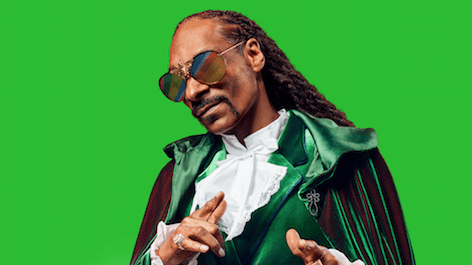
Menulog will stop taking orders in two weeks, shocking 2.6 million Australians customers, 120 redundant headquarters employees, and thousands of couriers whose income depended on its bright orange promise. After twenty years as Australia’s homegrown food delivery leader, the only remaining domestic competitor closes its doors. And the sector slides almost entirely into overseas hands.
Staff will receive redundancy beyond the legal minimum. Couriers will get support payments. And a two-week transition window now allows customers to redeem any remaining credits. It is a dignified exit, and Morten Belling, the company’s Managing Director, hit all the appropriate notes with his closing statement: “difficult decision,” “challenging circumstances,” “proud history.” But beneath the corporate cliche sits a harder truth: Menulog was up against tough global rivals, its margins turned toxic, and exit became inevitable.
The brand’s significance shouldn’t be understated. This was an Australian innovation that predated both Uber Eats and DoorDash—a marketplace built by Australians for Australians at the precise moment when online food delivery was about to reshape how the country eats. It helped thousands of small restaurants flourish. It was, for better or worse, a genuine pioneer in the gig economy.

No. Talk to people who actually used the app and everyone has a Menulog horror story. From drivers consistently leaving food in the rain at certain addresses, to appalling customer service, to waving their hands dismissively when accounts got hacked and fraud happened, to the literal police telling those victims that they shouldn’t use Menulog because they’re known to be terrible when it comes to privacy and fraud response – Menulog had a lot of issues that have nothing to do with their stories, pay or their marketing and PLENTY to do with not owning the fundamentals needed to offer the service they said they were providing.
I would say the missed editorial perspective is the decline and ultimate failure of ‘celebrity’ endorsements, and the complete imbalance in cost/reward for brands. Dare I say that Snoop and Katie’s fee would have kept the cash flow positive
Love this. Couple of things I think worth noting though.
– Menulog never employed delivery drivers. Instead relied on restaurants employing their own, which created huge friction in the user experience at it’s core (they never had visibility on when things were being delivered and couldn’t show it in their app). Their model also meant, on average, they were a lot cheaper (they operated as an affiliate, vs. a logistics contractor essentially – they simply passed the order on). Masterclass in why consumers will pay more imo on user experience.
– The losses are what puzzle me on this one. The modern Menulog technical experience likely could be supported with very little support and investment by the core JustEat and live off the brand profitably (I honestly think you could maintain it with a team of like ~6 people). So I don’t really get the Prosus argument here to pull out.
I also absolutely loved the Menulog marketing. Great brand. But shows branding can’t always fight fundamentals…
Really sad to see Menulog shut down, and nice article Mark.
Having previously worked in the industry, a few details about the unit economics of businesses like Menulog will probably help folks unravel the riddle of the losses.
– The average food delivery order will be ~$30, plus a ~$5 delivery fee
– From that, there is probably a 25-30% commission on the $30, and the rest of the $30 goes to the restaurant, which means the delivery company keeps ~$13 per order
– Out of that they need to pay maybe $1 in processing and customer service fees, and then they have to pay the courier.
– If the courier is doing 2 orders per hour, and getting paid minimum wage, that’s $12.5 per order, so the company will be losing $0.5 an order.
– If they’re doing 3-4 orders an hour (which might be typical for peak times), then they’ll make ~$2-5 an order or so.
– For orders delivered by the restaurant, these would probably be giving the company a 10-15% commission, so $3-5 per order.
> In short, of the $245M revenue, that would equate to around ~7M orders, so maybe $15M – $30M in gross profit depending on what percentage was delivered by the company, and how many orders per hour per courier were achieved.
>> Out of that, they would have to pay hundreds of staff to manage restaurant relationships, customer service, marketing, and product, and then of course come up with a healthy media budget to maintain their market share…
So yep, food delivery is a tough business to succeed in, and hats off to the Menulog team for competing so well long past Deliveroo and Foodora left the market.
Good points. The MD said it was the challenge of distribution which was their ultimate undoing.
A great lesson for our next generation of tech innovators.
Is this an opportunity for a potential buy out of the local entity from the parent – cut down on the overhead, go back to the gig contractors rather than employees, maybe pay a franchise type fee to Menulog parent (depending on profitability) – and keep the 3rd competitor in the market as Mark talks about.
What is completely missed here is the problem with the product. The marketing was great. Using celebs is not on the out (just look at Uber…).
Menulog’s promotion was fine, its pricing was fine. Its product and, apparently, its distribution let it down.