
Ritson on the great Coles swindle: Forget reputation, it’s the legislative response that matters
In this column, Mark Ritson details Coles’ pricing sins, its defence and the damage its ongoing trial for misleading shoppers will inflict … which, despite the pronouncements of “semi-professors”, will not be reputational.
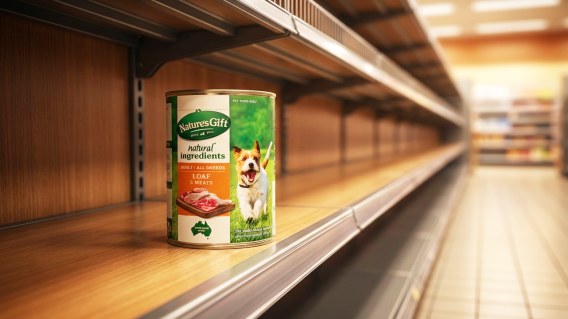
What's in store for Coles? Smart money's on a $200m kick (Gemini)
For 296 days, a can of Nature’s Gift dog food sat on the shelves of Coles with a price tag of $4. Then, one day in early 2023, the price jumped to $6. It stayed there for precisely seven days. On the eighth day, the price dropped to $4.50. A cheerful red ticket appeared beneath the can.
Down Down. Prices are down.
A shopper scanning the aisle would see the ticket, clock the “was $6” label, note the new $4.50 price, and think: good deal. Except the deal wasn’t good. It was 50 cents more than the same shopper had been paying for the best part of a year. The price had not gone down. It had gone up. But Coles was telling customers the opposite, set to the tune of a jingle that, as ACCC barrister Garry Rich SC told the Federal Court in Melbourne on Monday, “sticks in one’s ear longer than is healthy”.
Dog food was just the beginning. When the ACCC launched proceedings in September 2024, it alleged Coles had pulled the same trick on 245 products, from Tim Tams to Colgate to Strepsils. Over 16 months between February 2022 and May 2023, the playbook was identical. Take a product sitting at a stable long-term price. Spike it by at least 15 per cent for a few weeks. Lower it to a price still higher than the original. Slap on a Down Down ticket and tell customers they were saving money.

The ACCC’s evidence suggests this was not a pricing error. Internal documents show the spike-and-drop was planned. Suppliers and Coles agreed to, in the ACCC’s words, “jack up the price by a lot for a short period, otherwise the Down Down promotion won’t work”. Millions of products were sold this way. Former ACCC chair Allan Fels has called it “the case of the century”.

Cheap dates: Coles is still enthusiastically using “Down Down”
Coles’ barrister John Sheahan KC mounted a disarmingly philosophical defence in Melbourne this week. Inflation was real, he argued. Supplier costs surged. The price increases were genuine responses to wholesale pressure from the likes of Coca-Cola and Colgate. “Ordinary, reasonable consumers know they’re in an inflationary environment,” Sheahan told Justice Michael O’Bryan. And then, with the quiet confidence of a man who has never compared the prices of bin bags in Aisle 7: “In the end, all prices are temporary. Nothing lasts forever.”
It is the kind of observation that sounds profound in a courtroom and absurd in a pub. The consumer did not know the dog food had been $4 for ten months. They did not know it had been briefly jacked to $6. They saw “Down Down” and concluded, reasonably, that Coles was lowering prices. That conclusion was wrong. And the ACCC’s evidence suggests it was deliberately wrong. “Not fair dinkum” was Rich’s plaintive summary.
It is not. But will any of this actually hurt Coles? I doubt it.
Consider Qantas. By 2024 the national carrier had plummeted from one of Australia’s five most trusted brands to one of its five least trusted, per Roy Morgan. And yet Qantas posted record profits and doubled its share price. Aussies love to give a big brand a good spray. But when they need to get to Wagga they know what’s good for them. Nobody expects anything fancy from their airline, and they expect even less from their supermarket. Roy Morgan showed both Coles and Woolworths hitting record distrust in 2024 and 2025. The distrust is already priced in, if you’ll forgive the expression.
We live in a Byron Sharp-shaped world. Salience and physical availability trump pretty much everything, and Coles has trolleys overflowing with both of them. Over 860 stores. Twenty-eight per cent of grocery sales in a market where it and Woolworths control two-thirds between them. The ACCC’s own inquiry concluded there is no “silver bullet” to address their entrenched dominance. Where exactly is the outraged consumer supposed to go? Aldi is further away and doesn’t stock half the brands. The local IGA charges more. The indignation is real. The threatened boycotts are not.
Coles will not suffer lasting reputational damage from this trial, despite what some addled semi-professor from a former TAFE in a bad bow tie is about to tell you from a book-lined backdrop. But they are not going to escape lightly either. The real cost won’t be reputational. It will be legislative.
Under Australia’s revised penalties, the maximum fine is $50 million per contravention for this kind of thing, or 30 per cent of turnover during the breach period. Either way that would mean a fine landing somewhere between $12 and $14 billion, roughly half the company’s market capitalisation. That is the theoretical ceiling. Nobody expects it. But it frames the negotiation.

Ritson: A real professor who eschews neck-wear
What Coles’ legal team will be pushing for, with everything they have, is the third and most lenient option: a fine totalling three times the benefit obtained. There is a lot of wiggle room in that calculation. Two hundred and forty-five products, sold across 860 stores for 16 months at a price uplift of around a dollar, multiplied by three, lands somewhere between $100 million and $600 million depending on how generously you estimate unit sales. Coles will push for the lower end. The ACCC will push the other way. Allan Fels expects “much more than $150 million”. It could become the biggest consumer law penalty in Australian history.
The smart money says Coles lands somewhere around $200 million. The share price is actually up over recent months, not cratering, which tells you the market does not see an existential threat. Coles posted a net profit of $1.1 billion last financial year. A $200 million penalty is about nine weeks of earnings. Enough to sting. Not enough to maim.
A darker strategic calculation is at play here. If the ACCC pushes Coles too far down, down, they risk empowering Woolworths, rendering an already oligopolistic market even more lopsided. The regulator needs Coles healthy enough to compete. It’s a strange, almost parental position: punishing a company you also need to protect.
The case will last about ten days. The verdict will take months. And the fine? It could be $100 million. It could be $400 million. It could, in theory, reach billions, though nobody expects that. What we do know is that Coles generated more than $47 billion in supermarket revenue during the 16 months it was allegedly ripping off its customers. Whatever number the Federal Court lands on, Coles will pay it, appeal it, and open its doors the next morning to the same eight million weekly shoppers who have nowhere else to go.
As Coles’ own barrister told the court last week: nothing lasts forever. He was talking about prices. He could just as easily have been talking about public outrage.
Mark Ritson is a professor, brand consultant and award-winning columnist. The MiniMBA in Marketing – www.minimba.com – starts its next intake in April. Aussie marketers wanted. It costs $3,629. And you’ll be relieved to know that was exactly what it cost last year too.
More so than fines, I hope that retailers in such a powerful position as Coles and Woolies are forced to publish their prices and price history of their products via an openly accessible API. The availability of this data would give consumers more power to inspect and compare prices independently of the retailers
Because your mass market dog food buyer really wants to set up an api on a Saturday morning.
If only they had called the promotion “Up Up” they would not be before the ACCC in 2026.
Back in the 90’s I remember after getting a one of the few price increases through Coles insisting we validate the price for 12 weeks prior to promoting. The buyer called it “price establishing”
So what would be a reasonable response in the case of broad based supply side cost increases?
If you know lots of costs are higher. And – not surprisingly- consumers look for sale signals more than in the past.
Plus the pricing team must generate a steady supply of content for the high velocity marketing process.
The result is a process driven approach cycling discounts through key value items.
If we take away the emotive reporting (spike, hike &slap those prices) how would a smart marketing lens view this strategy?
i cant work out why coles and woolies brand trust isnt like the big 4 banks in the 2000s and qantas a few years back.
Congrats to their marketing teams for directing cost of living anger elsewhere.
No staff, disproportionately higher prices, crap parking and shopper experience should equal more shopper pushback.
But it appears saying your supporting farmers when all the time screwing down suppliers and primary producer, and jacking up prices without a shred of concern seems to be working for them.
bravo…