
The Isis brides: An unnecessary case of messaging chaos

Crisis communications expert Peter Wilkinson takes a look at the Isis brides story and finds a policy vacuum at the heart of the problem.
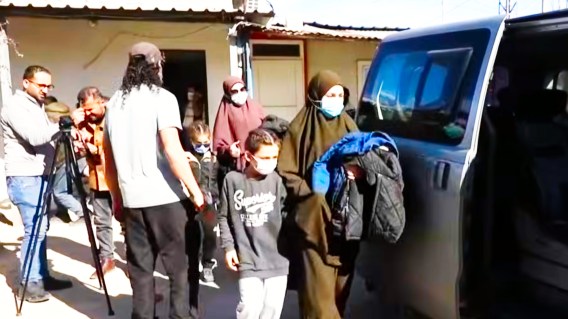
Issues confronting leaders are made more chaotic if they are poorly communicated. The messaging around the Isis brides story is another great case of what not to do.

In short: A group of women (presumably radicalised) left Australia to engage with Isis in the war between 2014-19. Now defeated, a remnant group live in squalid camps in Syria. Unsurprisingly, 11 Isis brides (with 23 children) want to come home, like other women and children previously repatriated.

Are they a threat or not – silly victims, or villains?

Security agencies globally have grappled with this, and most governments have clearly communicated their policy (see below). Our government? It became mired in a messaging mess with prime minister Anthony Albanese and colleagues dancing around the issues, denying direct responsibility, and creating confusion.

As with CEOs and boards of companies with any issue, stakeholders expect clear statements and action. Done well, trust goes up.

The alternative? Without defined principles, policy and strategic direction will be absent, actions will be knee-jerk and unpredictable, and comms will be confused. Trust goes down.

Other countries have policies, which appear to have been communicated:

  • Germany: repatriates, prosecutes and rehabilitates (de-radicalisation programs)
  • USA: repatriates citizens, prosecutes, refuses return to those whose citizenship is invalid
  • India: India’s policy is security-first – no repatriation
  • Spain: repatriation, rehabilitation, reintegration, and prosecution
  • Canada: repatriates and prosecutes
  • UK: administers case-by-case returns – has stripped brides of citizenship
  • France: does repatriate, but in highly supervised batches

While these countries also have legal challenges to their policies, it’s pretty clear where the governments stand in the first place. In Australia, even the question of “Are they coming home?” seemed to have had no early, clear answer from the government.

Peter Wilkinson

The author Peter Wilkinson

Home Affairs Minister Tony Burke attempted a clear explanation on ABC’s Insiders on Sunday. It was a good interview, with detail and nuance, but again, the higher takeaway was less a principle-led policy, and more a hands-off legal-only obligation to these women.

We advise clients to develop three messaging responses:

  • the incident message (response to the issue)
  • the organisation message (principle-led policy)
  • the personal message (we prefer annunciating behaviours over values)

Such a message, annunciated early and repeated often, might have run like this: “The principles here are ‘We take care of our own’, but ‘If there’s crime, they’ll do the time’. I am totally committed to ensuring these principles apply here.”

“From the minute they get here, they are going to be watched. Options for some include de-radicalisation programs; some have already been assessed for prosecution; some will be returned to their families, but monitored closely and interviewed regularly.

“That way, I am as certain as possible that Australians are safe!”

This column originally appeared, in a slightly different form, as a Linkedin post. Peter Wilkinson is chair of Wilkinson Butler and a crisis communications expert.

Get the latest media and marketing industry news (and views) direct to your inbox.

Sign up to the free Mumbrella newsletter now.

"*" indicates required fields


SUBSCRIBE

Sign up to our free daily update to get the latest in media and marketing.