The new broadcast is a great ad
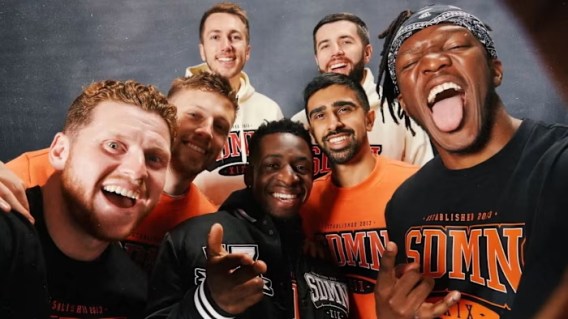
The Sidemen (Youtube)
There is so much chat about the history of advertising on Linkedin right now. Much of it is glorifying the days where ads – even mediocre ones – were part of the culture. Anyone over a certain age remembers being bombarded with messages that weren’t targeted at them. Brands broadcast on the few channels available to them, and we consumed everything. Those days are gone, but that doesn’t mean opportunities for top-tier creatives have gone with them.
A few months ago, I wrote in Mumbrella about the gulf between Gen Z and traditional advertising channels, and how we appear to be staring into a black hole. Finally, I have seen the light, and I’m optimistic that it is brilliant news for advertisers. Brilliant, but terrifying.
I’ve been following the Jordan Schwarzenberger with interest. Schwarzenberger is the UK-based manager of Youtube creator collective The Sidemen, and to me he appears to be the lone saint who can lead us into a future where many of us might still have jobs.
Far from being a snake-oil peddling shill, Schwarzenberger is down to earth, practical and honest about where he believes advertising is going. According to him, linear TV is advertising’s past. It’s great for the over 60s, but minimal numbers of Gen Z engage. The idea that they will switch to linear once they grow up is wishful thinking.

While catch-up is still popular, TV advertising is expensive, slow and can afford to be sub-optimal creatively because people are forced to sit through it. The wake-up call to advertisers is that the interruption model, where clients self-publish mediocre content which viewers are unable skip, might be over.
While ad agencies were sleeping, creators have stolen their thunder. Top creators now attract viewer numbers in their millions, way more than many media channels. This means that one creator’s Youtube channel can reach more Gen Z than any current TV channel can hope to. And there’s more. Where top creators once spruiked other people’s products for cash, many now make their money from subscribers, meaning they don’t need brands. At least not other people’s.

The author Chas Bayfield
Creators are now launching their own brands, which is where Schwarzenberger comes in. The Sidemen, his influencer supergroup watched by 70% of UK Gen Z’s, have millions of monthly views, numbers that even the best linear TV shows could never dream of.
Rather than just promote other people’s products, Schwarzenberger is helping his team create their own. When you have a captive audience of millions, why not launch a vodka, a restaurant chain, a face cream? This is do-or-die for old world brands. How will Domino’s compete when the nation is full of ghost kitchens supplying Sidemen-branded pizza? How will HSBC attract students when a bunch of guys famous for gaming commentary and reaction videos launch a bank?
It’s scary stuff for sure, but there is hope for ad creatives. It’s just that your future may not be at an old world ad agency. The Sidemen employs over 40 people, and creativity is always in demand. There’s hope for brands too, if they are able to pivot.
Not everything can be replaced by the creator economy, and ads as we know them can work, but only when they are top drawer. Simply paying money to amplify crap isn’t going to cut. No one will see your advertising. No one will care about your brand.
Great creative work rises to the top. Instagram and Tiktok may occasionally share content from the people who you follow, but more often, they serve you content that other people like. The good stuff.
The 1999 Guinness Surfers ad still gets shared by people who aren’t in advertising, who may not have been born when the ad was made, and don’t live in the original target market. And regardless of the brand’s current campaigns, that ad still flogs beer.

A still from Guinness Surfers (1999)
The rules for advertisers are simple. Make formidable content and it will be seen. If HSBC, for example, pulls out a blinder of an ad that truly connects to Gen Z, people will see it and sign up. An awesome piece of content will find an entirely new and potentially global audience. It will make a brand famous among strangers. Think of it as broadcast advertising, but on social media.
You only need to make one great ad that catches the zeitgeist to reach every market on the planet. We’re back to an age where we all see everything. Only bigger.
Brands need to approach things a little differently. To be less stiff, more agile, less bureaucratic and less scared. Creatives need to raise their game and think in new ways. Last week, a choir of farmers synonymous with Jeremy Clarkson’s Hawkstone Beer won a golden buzzer on X Factor in the UK.
Sure, X Factor is a linear TV show, but it’s also on catch-up, and clips are shared on social media. It is effectively a beer ad, run for free, broadcast on the nation’s biggest TV show, then shared around the planet. Credit to Jim Bolton, who also wrote the St George Blackcurrant Tango ad. A man from advertising’s golden age, banging on the door of the future. Schwarzenberger. Bolton. Where is everyone else? With enough brilliant creatives and bold clients, advertising’s future could be as glittering as its past.
Calling this ‘the new broadcast’ is just rebranding the last era when attention could be aggregated at scale. Today, attention doesn’t concentrate – it splinters. Culture doesn’t broadcast, it propagates. Mass reach is still available; meaningful attention isn’t. This isn’t forward-looking strategy, it’s nostalgia dressed up as inevitability.
Brands reaching large audiences beyond their targets is dictionary definition broadcast! I’m framing it in terms that those nostalgic for the 20th century will understand. If you read my other blogs and LI posts, you’ll see I am not remotely nostalgic, nor did I see it as a golden age.