
Vinyl sticks to break-even deadline, aims to use AI to increase content 10x
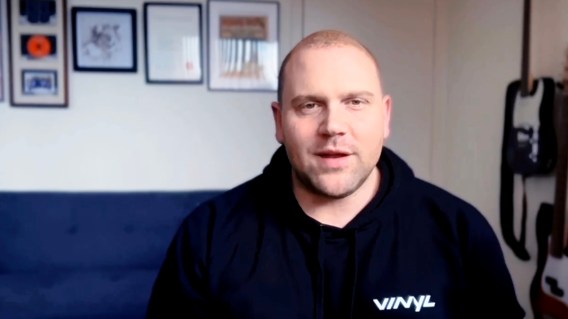
Vinyl boss Simons: Still losing money, but closing the gap?
Media network Vinyl Group has stuck to its end-of-year break-even deadline in an investor presentation that revealed plans to increase content output by ten times using AI.
The presentation reveals more details of the content strategy CEO Josh Simons has been teasing for months.
Financial details included in the presentation and in a separate ASX filing imply that Vinyl’s EBITDA (earnings before interest, tax and other deductions) was still negative in Q1 FY26 (July-September). While the exact numbers were not given in the documents, operating cash outflow (“cash burn”) was $1.41m, down on the previous quarter’s cash outflow of $1.76m.
Vinyl said the quarterly cash burn also included over half a million dollars in “one-offs” such as redundancy payouts.

Using generative AI to simply rehash existing information creates a significant business vulnerability. Automating back-end tasks like distribution and tagging is now standard practice; framing it as an innovation shows Vinyl is playing catch-up, not leading. Without adding original research or journalism, a media company offers little unique value, pursuing a strategy that competitors can instantly copy. This approach risks flooding the market with low-value, “AI slop” and begs the question: what is the defensible purpose of a media business that only adds to the noise?
Media’s opportunity is to position as tangible and real – the antithesis of AI slop, which is entering mainstream lexicon.
Supposed ‘publishers’ turning to AI slop as the core of their business model (even if proof-read by what they describe as an ‘Editor’) is the last gasp of the unprofitable.
Proper publishers are turning (and have already turned) in the opposite direction by forming genuine relationships with actual readerships, rather than churning out AI noise to nobody in particular.