
‘Worse than death threats’: The NZ startup taking on the comments section
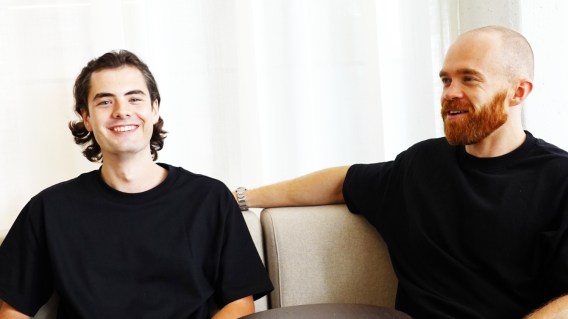
Theo Taylor and Sam Broadhead
Hundreds of thousands of hateful comments are sitting on the Facebook feeds of Australian news publishers, according to a scan from a social media startup that is using multiple AI models to understand comment intent and context.
“Conversational intelligence” company Sence scanned 4.8m comments on 114 publisher pages and found virulent racism and violent threats among around 400,000 harmful comments attached to news stories.
The New Zealand operation — which has signed up The All Blacks, NZME and Radio New Zealand in its home market — is now pushing into Australia and is using the scan as an illustration of the extent of the problem.
”We were a bit shocked at how ruthless these comments can be in Australia,” Sence co-founder Theo Taylor told Mumbrella.

“Whether it’s politically charged, racially charged, there’s quite a lot of rhetoric out there. And this was just using our base analysis.”

One of 400,000 harmful comments sitting on Australian news posts currently (Sence)
“ There are comments out there that are hard to believe that people are leaving in public forums,” Taylor’s co-founder Sam Broadhead said.
“Especially with their profile picture attached to them.”
The pair founded Sence in 2023, having initially been inspired to action by the comments on the Youtube content of standup comedians.
“I’ve got a passion for standup comedy,” Taylor said. The initial question the pair set out to solve was how to use the comments as a signal back to the comedians about what material was working.
“Standup comedians … wanted to understand what their audience was saying about them online, but they didn’t have a tool to manage the large volumes of comments,” Broadhead said.
“The conversations are extremely nuanced by audience. So we built this tool and this model that built this universe and this understanding of what these social media comments are, what platform they’re being left on, what posts they’re being left on.”
The subtleties of humour were a good grounding for comments on more general content.
“We found that the insights we were generating were extremely accurate and extremely interesting to brands and sports teams and media publishers.”
The pair bring different skills to the company: Broadhead, a software engineer formerly at retail crime intelligence company Auror, handles tech. Taylor, who worked at JB Were and PWC, is on sales, relationships and strategy.

The Sence interface, in this case looking at Youtube comments on the ICC account (Sence)
Having signed up several big name NZ clients, the pair have decided to push into Australia. The scan of a month’s worth of Facebook comments on the posts of 14 of Australia’s biggest publishers turned up a great deal of textual poison.
While Sence was able to scan Facebook comments for all Australian publishers because of the way the public API works, that isn’t possible with other platforms when Sence does not have the account owner’s permission. With clients, it also currently covers Instagram, Tiktok, Youtube and Linkedin.
“We have direct first party integrations with all of these platforms,” Broadhead said. “ For Facebook we are able to access the public data of any Facebook page. Whereas the other platforms, while the comments are still public and you can go and fetch them to look at them programmatically using APIs, you need the connection from the account owner.”
What they found in the Australian comments sections was not pretty.
“We found there’s a large amount of racism and hate speech that’s going unchecked on these comments. And I think this is a pretty common trend we’re seeing across the industry at the moment.”
Broadhead believes there has been an increase in hateful comments.
“Somewhere along the way people got comfortable putting these horrific messages out into the world,” he said.
“They’re worse than death threats … threats towards families and loved ones … it’s horrible, horrible stuff.”
In the case of threatening content — with a demonstrated motive, means and opportunity to do harm — flagging with the publisher and platform rather than moderating is the appropriate action.
Despite how bleak some of the comments could be, both co-founders were upbeat about the mission.
“I grew up on social media,” Broadhead said. “I spent a lot of time in the comments. I think I spend more time reading the comments than the content. So I love working in this space and I think seeing the size of the problem, and also our ability to build a solution around it, is pretty motivating.”
Sam Broadhead and Theo Taylor are this week’s guests on The Unmakers podcast series, running as part of the Mumbrellacast and available to listen to in the player above. Sign up to have the Mumbrellacast delivered to your podcast app.