
ACMA clocks up two decades of failing to close Kyle’s stable door
Every few years, the shortcomings of the Australian Communications and Media Authority as a regulator come into the foreground.

Even after 20 years of writing about the organisation, I’m unsure whether these failings are merely structural, or an organisational shortcoming.

The ultimate case study is The Kyle and Jackie O Show, or Breakfast with the Stars, as it used to be known when Kyle Sandilands and Jackie Henderson’s home was Southern Cross Austereo’s 2Day FM.
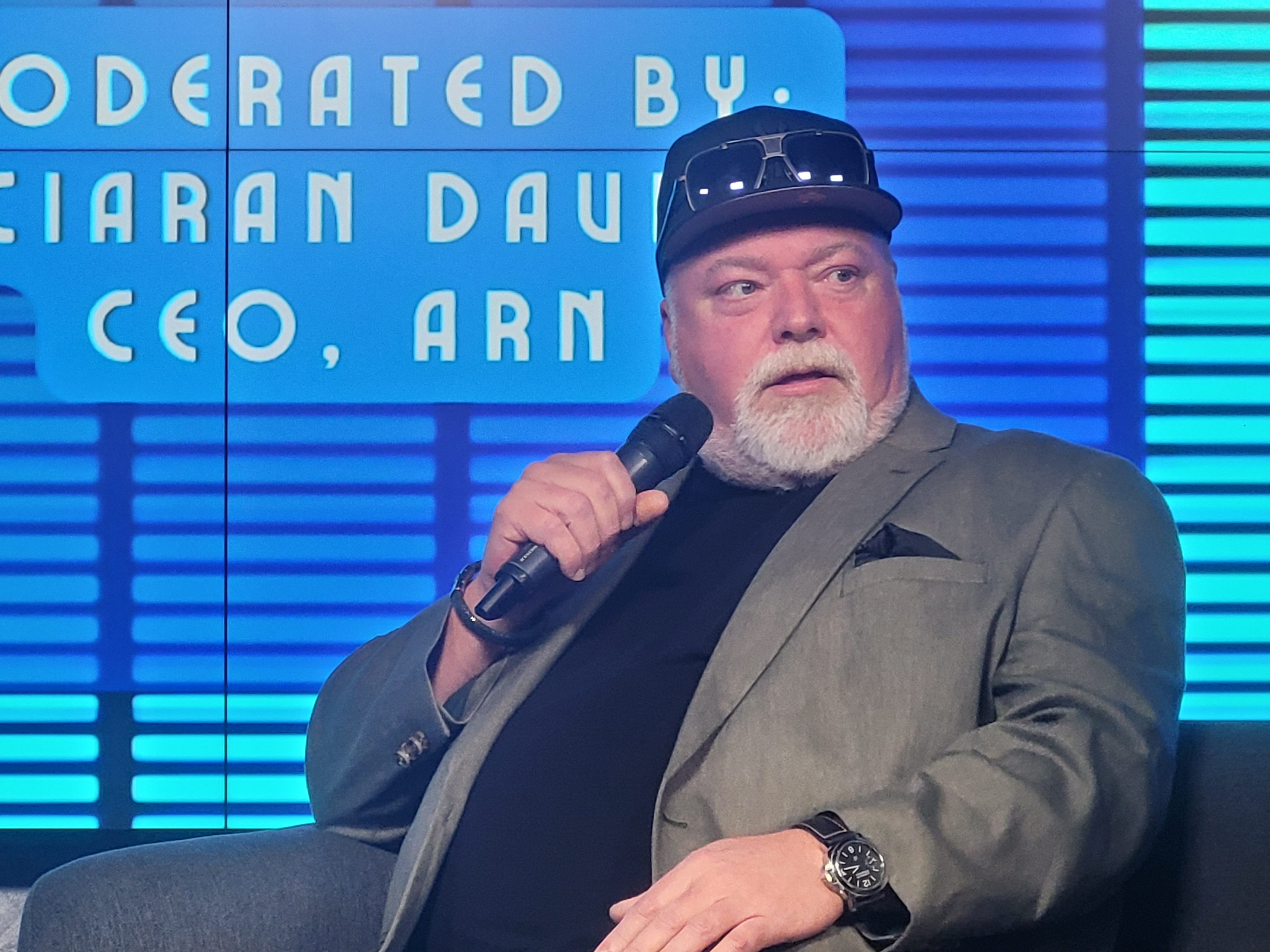
Sandilands has not held back in roasting his employer publicly in the past (Sandilands pictured at an ARN event in June 2025, Mumbrella)

This week we saw a farcical announcement from ACMA, announcing enforcement action roughly two years after the on-air incidents it (eventually) investigated, and one day before the show was officially axed, rendering the ruling meaningless.

Before we come back to K&J, it’s worth explaining the arcane structure in which commercial radio is regulated. Like the commercial TV sector, radio is run under a system which it likes to call co-regulation.

In practice, that means that the TV and radio industry get to write their own code of practice. When that’s periodically revised — generally to make things easier for the broadcasters — ACMA signs it off. Typically the broadcasters ask for everything during these provisions, and ACMA pushes back a little before giving them most of what they want.

Then when it comes to breaking the code, ACMA prefers not to get involved. If a listener or viewer hears something they don’t like they have to complain to the broadcaster first of all. The broadcaster has 30 days to deal with the complaint, and if the complainant is unhappy, only then can they take it to ACMA, which might then launch an investigation.

That investigation process then takes months or years. A report from ACMA into an incident that’s less than a year old is a rare thing.

If the investigation eventually results in a finding that the code has been breached, that is generally the end of the matter. ACMA has no power to fine TV or radio stations.

Instead, when the temperature rises to an ƒembarrassing point, ACMA can issue a licence condition. That means that in theory, if that specific clause of the radio code is broken again, the station could see its licence suspended or removed. Over the last two decades, licence conditions have been added on a handful of occasions. ACMA has never taken that further and actually removed or suspended a licence.

ACMA does have the power to launch investigations on its own rather than wait for a public complaint, but rarely does so.

Which brings us on to the case study of Sandilands and Henderson.

One of the most memorable press conferences I’ve attended was conducted by then-ACMA chair Chris Chapman, after Sandilands’ abusive on-air attack the previous year on a young journalist who had written something negative about his failed TV show Night with the Stars.

My apologies for the poor quality image of that moment by the way. Fourteen years ago, my Blackberry had a potato for a camera.

ACMA’s chair Chapman was besieged by journalists (Mumbrella)

A pack of 30 or so journos were incredulous when Chapman announced a condition had been added to 2Day’s licence. If the show broke that rule again, the licence could be in peril. Chapman seemed to genuinely struggle to understand why this theoretical threat wasn’t seen as an actual punishment.

That licence condition was added in March 2012, seven years into what had become a show notorious for truly shocking moments, including the time Sandilands asked a teenage girl attached to a lie detector about her rape.

Some 20 months later, the duo left 2Day FM to launch Kiss FM for ARN Media. The licence condition they had faced at 2Day FM was effectively cancelled. Memorably, Greens senator Sarah Hanson-Young later likened it to a pedophile priest escaping justice by changing parishes.

It was only after Hanson-Young embarrassed current ACMA chair Nerida O’Loughlin in Senate Estimates — by challenging her to read from a transcript of The Kyle and Jackie O Show — that the regulator took a real interest in the complaints it finally acted on this week.

Sarah Hanson-Young making life uncomfortable for ACMA in Senate Estimates

In other words, for only 20 months out of the 27 years that Sandilands and Henderson broadcast together have they faced any sort of substantial sanction.

Ironically, Sandilands and Henderson would have benefitted from a tougher regulator.

ARN’s problems come because the show ran wild for months or even years, pushing their content to the limits. Nobody noticed, or did anything about it, until the duo signed their new ten-year contract and expanded their show into Melbourne.

With a new audience and new attention, the smut factor became a talking point. It was also a huge turn-off for a new audience that had not acclimatised to it.

Rather than facing action from the regulator, the campaign group Mad Fucking Witches launched an increasingly effective advertiser boycott campaign which was much more damaging. The double whammy of poor ratings in Melbourne and the advertising boycott made the show commercially untenable.

And then, when the show was dead, ACMA finally acted.

What’s that they say about stable doors?

Get the latest media and marketing industry news (and views) direct to your inbox.

Sign up to the free Mumbrella newsletter now.

"*" indicates required fields


SUBSCRIBE

Sign up to our free daily update to get the latest in media and marketing.