
Animal wranglers: keeping the instinct alive
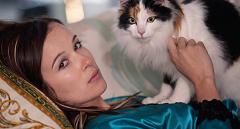 Animals are an important part of the human experience and therefore, they play a vital role in many screen productions. But their trainers are struggling, so are animal wranglers the next endangered species? Georgina Pearson reports.
The old show business saying “never work with children or animals” is a reminder of the power of an animal performance, which can connect with audiences in ways that humans rarely can.
There are always films, TV shows and TVCs requiring an animal cast member of some sort, so the pressure to deliver falls on animal wranglers. And with every scene requiring hours of training, not to mention thousands of dollars, the stakes are high to get it right.
As the industry rapidly moves into increasingly realistic CGI, it would seem that using real animals on-screen is a slow dying art form. It is not; however, in Australia at least, the biggest issues this sector is facing come from an entirely different source.
In order for Australian animal wranglers to keep up globally, the ability to train and access exotic animals is vital. But the bureaucratic tape seems endless – and obtaining the requisite permissions is a long and arduous process.
Kirsten Feddersen from Kirsko Film Animals (Sleeping Beauty, Home and Away) is frustrated with the lack of support. “The Government makes it difficult for us to work to our full potential. It took me five years to get my licence to keep crows, but it takes a farmer five days to get a licence to shoot crows. I am into year seven of trying to import two leopards into Australia to use in the screen industry because we have no working specimens in the country, and no remaining breeding leopards.
“The Department of Environment and Heritage claims that I am not an ‘exceptional case’ even though I have spent years overseas learning how to train all kinds of big cats and other exotic animals from the world’s best trainers,” she explained.
Feddersen claims that the unavailability of certain species is costing the screen industry a large amount of work. However, Animal Actors’ Christine Powell believes that is ultimately not the case, suggesting that even if the laws were relaxed – there just isn’t the demand: “It is hugely expensive to import and as there is very little work for exotics; it is not worth the trouble of keeping them.”

I really sympathise with you! I adore animals with a passion, yet there’s this constant pressure to reduce costs, cut corners, get things for as little as possible. I don’t know how you stay sane! Oh, yes, that’s right: spending time along with your wonderful animals. That’s really beyond measure. Thanks for the interesting article!
Good article.
I think the film industry as a whole is under more pressure these days.
As an animal trainer / wrangler in NZ I can say that all the things you have said in your article are true over in NZ as well.
I have enjoyed my job for over 16 years and will keep training the animals even if there is no film work.
Karen