
Global Traffic Network: $40m loss and choppers for sale
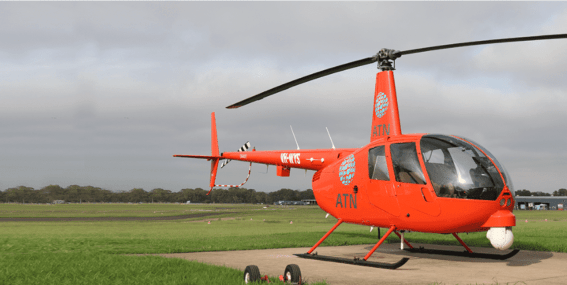
GTN is selling off its Australian fleet of choppers
Global Traffic Network (GTN) has posted a $40.9m loss for the first half of the financial year, with revenue down by 14.7%.
GTN, which runs the Australian Traffic Network updates that appear in most Australian radio networks, has also written down the entire value of its UK operation, and decided to retire and sell its fleet of helicopters.
For the half ending December 31 2025, GTN posted $82.5m in revenue, a $14.2m fall.

GTN was founded in Australia in 1997, and provides traffic updates, fuel pricing, weather updates, and news bulletins for an audience of 91 million people each week across the UK, Canada, Brazil, and Australia.
Australian Traffic Network, which makes up 47% of the group’s total revenue, brought in $38.4m. This represents a 12.7% drop, or $5.56m.
The company posted adjusted EBITDA of $5.8m, down 53% year-on-year. This includes $3.8m interest on long-term pre-paid affiliate contracts, and a $500,000 loss on fixed asset disposal. The unadjusted EBITDA is 2.5m.
The company has $35m in debt, with net debt just under $7m, due to its cash position of having $28.1m in hand.
Enjoying Mumbrella? Sign up for our free daily newsletter.
GTN recognised a non-cash impairment charge of $41.5m during the half, which is comprised of a partial impairment of goodwill in Australia due to the tightening of the radio advertising market, and a full write-down of the goodwill, intangibles, and property, plant, and equipment in the UK.
During the investor call, chief financial officer Ben Brooks explained this “reflects a pragmatic reassessment of near-term forecasts given the macroeconomic environment in those markets. It’s a non-cash item and has no bearing on our day-to-day liquidity, capital management, and shareholder returns.”
Its other big expenses were $62.8m in network operating costs and station payments, and $17.6m in “selling, general and administrative expenses.”
In the last half of the calendar year, the company exited aviation in its Australian and Canadian markets.
Chairman Peter Tonagh explained this “strategic decision” in his directors’ report, writing that the group expects this to provide “considerable savings in operating expenditure beyond any potential revenue impact”.
“Early in the company’s evolution, aviation was seen as a barrier to entry and critical to the signing up of affiliates. However, in recent years with the advancement in technology, TV reports from a ground-based studio provide better value to clients.
“As a result, the helicopter fleets in both Australia and Canada have been reclassified as held for sale at 31 December 2025.”

Vic Lorusso is GTN’s new CEO, and he has a plan to turn the company around
Vic Lorusso, who was appointed as the global CEO of GTN in December after spending 26 years at Australian Traffic Network, had no doubt braced himself for a tough time at the investor call on Thursday morning.
The company had pencilled in an hour-long call to face the music, however Lorusso and Brooks raced through their mea culpas in five minutes before throwing to questions. There was only one — whether the SCA/Seven merger impacts their contracts (it doesn’t) — and the entire call was over in just over 7 minutes.
“I want to start by being direct,” Lorusso started the call. “The first half of FY26 was a tough period for GTN and our results reflect that.
“But it was also a period where we made some hard, necessary decisions to reset the business for the future. Market conditions remain challenging, particularly in our key markets, but rather than waiting for conditions to improve, we’ve taken decisive action on costs and our affiliate arrangements and on how we go to market.”
After throwing to Brooks, who raced through the financial results, Lorusso continued.
“So, what are we doing about it? Well, I want to walk you through three areas where we’ve taken decisive action.”
In short, these were: strengthening the company’s core affiliate partnerships; delivering a “compelling proposition” to advertising partners; and “actively managing costs through technology, including AI.”
The company has targeted annualised cost out for FY27 of $12 million to $17 million.
It has renegotiated significant arrangements with affiliates; and has exited aviation entirely, which Lorusso said will deliver approximately $3 million to $5 million in annual savings from the second half of FY26 onwards.
The sale of the helicopters will bring in “around $5m in cash proceeds this financial year, most of which has already been received in early 2026”, he said.
The company is “driving efficiencies through AI, comprehensive cost reviews, and improved sales systems — with an expected $2 million to $3 million in annualised savings being realised progressively through the year.”
GTN is also undertaking a market repositioning.
“We’re changing how we go to market, really focusing on direct client relationships, making better use of our unsold inventory to improve margins, and working with agency partners to access new client pools,” Lorusso said, adding these initiatives are “already underway, and we expect the benefits to build through the second half.”
Despite the brevity of the call and the dire results, Lorusso ended on a positive note.
“I’m relatively new to the GTN CEO role, but having been part of this business for over 25 years, it gives me confidence in the direction we’re taking.
“We have strong board and shareholder alignment, experienced country leadership teams, and a clear plan that we’re executing against.”
And a fleet of helicopters for sale. Serious offers only.
