
Kiwi finance news site NBR suing its own customers
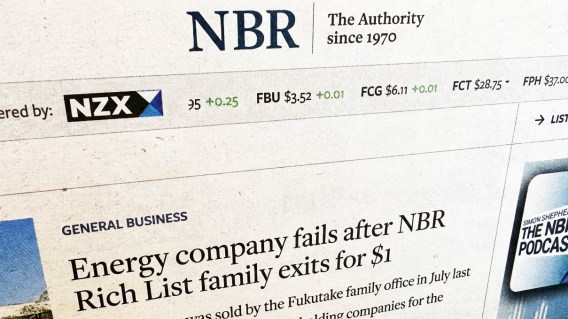
Stop the steal: NZ's NBR has taken big organisations to court over subs
New Zealand premium finance masthead NBR is taking some of its biggest customers to court, alleging they are cheating on subscriptions.
The extraordinary move has already netted the publication “hundreds of thousands of dollars” as government departments and big businesses have been forced to ensure all workers accessing the content have subscriptions.
Founded in 1970, NBR (full name “The National Business Review”) is one of New Zealand’s established finance publications and now has around 14,000 subscribers. It carries no advertising, relying on subscription revenue.
Last year owner and publisher Todd Scott began fiercely pushing for organisations such as the Internal Revenue Department (IRD – New Zealand’s tax collector) to stop distributing NBR articles and take out an appropriate number of subscriptions.

Scott has documented his crusade on Linkedin, calling the misuse “unlawful” and “unethical”, and saying “integrity, lawful conduct, and respect for intellectual property are fundamental to credible institutions and responsible journalism.”
Enjoying Mumbrella? Sign up for our free daily newsletter.
According to Scott, NBR has now settled with five institutions for “HEFTY damages” along with legal costs and extra subscriptions ongoing. He did not reveal the damages amounts or identities of the institutions.
Scott was contacted by Mumbrella for comment, but deferred to NBR co-editor Hamish McNicol, in part because Scott is so passionate about the issue he feared he may lapse into intemperate language.
As McNicol explained, the IRD’s cheating was particularly obvious: it went from 220 subs to one overnight after Christopher Luxon’s conservative coalition came to power in 2023.
“Last year it occurred to us that quite a few big-name corporates that we are writing about — a lot of government departments, a lot of other entities — had very few subs,” he said.

Hamish McNicol
“So we took a look and basically we were able to determine through investigations with our website provider, also some internal stuff we can do as well, that there was pretty strong evidence that a lot of corporates were just using one subscription to access our content and then sharing that one login with multiple staff.”
In the case of the IRD, when challenged it admitted it was reproducing articles from the single subscription and emailing them to over 600 employees. It is now squabbling with NBR over exactly how much it should pay in compensation.
“Our view is basically they owe us for 600 subs for that period in which they were trying to share content with that many people,” McNicol said. “Their view is 600 people didn’t always read those stories, and so we’re only going to pay for how many people actually read those stories. But it’s pretty clearly established that you don’t get a refund on what you don’t read when you subscribe to a service, right?”
He said the subscription enforcement had been rewarding financially.
“Since we’ve taken this action our subs are up 10%,” he said, which equated to “easily hundreds of thousands of dollars.”
NBR charges NZ$499 a year for an individual premium subscription, but businesses take out licences for multiple subs at lower rates.
McNicol said other publishers may not be as incentivised to go after cheating clients because they carried advertising, and therefore wanted the extra reach that came with wide distribution.
“I think a lot of the other media companies in New Zealand have paid attention to what we’re doing. We have heard from one or two that they are encountering the same issues, particularly with government departments.”
“It’s no easy decision to take legal action on this stuff. I think Todd and Jackie Scott, our publishers, deserve a lot of credit for being brave enough to do this, particularly against government departments like the IRD.”