
Less Mad Men, more SNL: The case for branded formats in advertising
Agencies may understand the digital landscape, but they’re still thinking like traditional advertisers, when all audiences really want is to be entertained.
Tom Rickard, an executive producer at Aunty Donna’s production company Haven’t You Done Well Productions, explains how the model of sketch comedy offers a far better roadmap for advertisers than old Madison Avenue tropes.
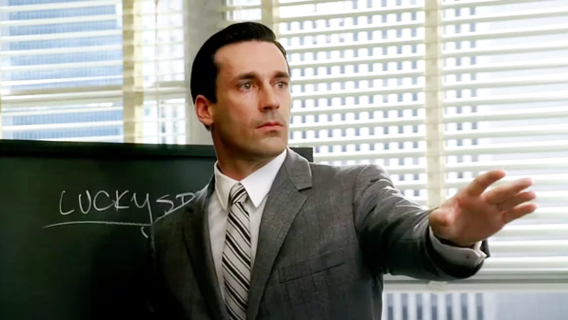
The days of Dan Draper pitching a tagline should be over
The concept of Don Draper presenting a gif-filled Canva deck, pitching a six second social media film, or explaining why Sterling Cooper’s use of a meme will connect to culture amuses me. The disconnect between this show’s traditional representation of advertising and the current needs of clients and consumers would be even funnier if it wasn’t uncomfortably close to reality.
Yes, the industry has long evolved past the glory days of Madison Avenue. Agencies understand digital, they speak Tiktok, they know how to make a bespoke six-second. But they’re still thinking like advertisers, when audiences want entertainers. The tools may have changed but the mindset hasn’t.
Audiences these days aren’t content with a 30sec TVC in their feeds. Nor their 15s cut downs. People are craving entertainment, not interruption. Many brands still act like advertisers in a world that rewards entertainers. So perhaps it’s time for agencies and brands to think less like Mad Men, and more like Saturday Night Live. Because the real shift isn’t just from ads to entertainment, it’s from one-off campaigns to repeatable formats.
Build formats not interruptions
For over 50 years, Saturday Night Live (SNL) has built its brand on repeatable formats: Weekend Update, Celebrity Jeopardy, the “Live from New York” cold open sketch. The show itself is a format and SNL stays relevant by doing roughly the same thing every week: providing fresh content in a familiar framework. That’s the format advantage. They’ve created the perfect vehicle that allows them to both build long term brand memory while introducing new time-sensitive content weekly. What SNL built for culture, brands can build for audiences

But SNL isn’t the only proof. Online shows like Hot Ones and Chicken Shop Date prove formats work outside legacy entertainment mediums, and they’re thriving in the creator economy that brands can more easily access.
This isn’t just cultural intuition. The mechanics of formats map neatly onto what brand research tells us actually builds memory. Let’s take System1 and Tiktok recent white paper, The long and short (form) of it. The very nature of that research is build on the premise that “short-form entertainment builds brands and converts”.
Memory structures, brand awareness
The case for a balance between long-term and short-term approaches to marketing is nothing new. This same sentiment has been championed by the modern pantheon of marketing minds (Binet, Field, Ritson, etc). It’s therefore not hard to see the brand recall benefit of sticking to an identifiable structure that also provides room to vary in current and relatable content. That’s exactly what a format does. It builds memory through structure, and conversion through content.
Done in the right way, repeating a familiar format doesn’t bore audiences. In fact quite the opposite, audiences begin to anticipate and adore it. With SNL, people tune in for the repetition, not despite it. The framework is familiar; the content inside stays fresh. Brands talk about ‘always-on content’ like it’s a chore. SNL’s been doing it for 50 years, live, every Saturday night.
Brand assets
The long and short (form) of it includes some fascinating research into the importance and effect of various brand assets and features for both long term brand building and short term conversion.
These include: “Spontaneous changes in facial expressions, a recognisable place, a hummable tune, people interacting, [and] something out of the ordinary.”
Translated from ad language into entertainment language, this becomes: a recognisable set, with a catchy theme song, where characters interact in comedic and surprising ways.
Now go and watch an episode of Hot Ones and Chicken Shop Date and tell me what you see.
These structures create the perfect place to insert early branding (sonic and visual), product placements, fluent characters, logo in-context and a whole other range of assets identified in the aforementioned report as helping both brand building and conversion
Showmanship
Formats force brands to think like showrunners, not campaign managers. As we wade further from the shores to the depths of AI sameness, it’s vital that brands consider how to engage their audience. So, how can you create a highly entertaining form of content that both satiates the viewer, your customer, as well create a truly distinct form of content that is unmistakable yours?
Formats demand creative leadership. You can’t spreadsheet your way to a show people love. A good starting place is a writers’ room. Gather a bunch of very funny comedy writers and put them in a dingy windowless hovel for two days. The output comes night and day.
Comedy as distribution
Comedy is not just decoration, it’s a means of distribution and always has been; it’s something you don’t just skip, but actively share. Oracle’s 2022 Happiness Report found that 91% of consumers want brands to be funny, despite only 20% of brands using comedy. Formats give comedy a repeatable home, turning one funny moment into an ongoing relationship with audiences
Formats aren’t ads. They’re entertainment properties that happen to have commercial applications. The playbook for product integration into entertainment has existed for decades. The only question is whether brands are still brave enough to use it.


the best branded content I have ever seen were the Subway and Honda episodes of Community