
‘Strategy without pain is just cosplay’: What Brewdog’s decline teaches us about marketing

Here Four Pillars co-founder Matt Jones explains that a brand is shaped by what an organisation repeatedly chooses to do, rather than what marketing says it is.

The lesson is to get out of “the wrong room” and start working at the heart of a business.
Last week, it took Brewdog just an 11-minute Teams call to tell its staff that almost 500 of them would be losing their jobs, alongside the immediate closure of 38 venues. The redundancies and closures were the consequence of Brewdog’s sale to Tilray Brands, a US packaged goods company with a portfolio spanning cannabis products and craft beer.

Not on the call were the tens of thousands of consumers and supporters who had invested in Brewdog through its iconic, and brand-reinforcing, “Equity for Punks” scheme. Those fans invested around £75m in Brewdog. At its peak, Brewdog was reported to be worth up to £2bn (about A$4b or roughly two and a half Eucalyptuses). Now those retail investments are officially worth nothing.

Alongside the staff who lost their jobs and the investors who lost their shirts, I found myself thinking about another group: Brewdog’s marketing and communications team. Just last year, Brewdog cheerily announced “a new era”, declaring that “2025 is about putting our community and beer lovers back at the heart of this business”. They even reached for that beloved catch-cry of Linkedin’s eager entrepreneur class: “we’re just getting started”.
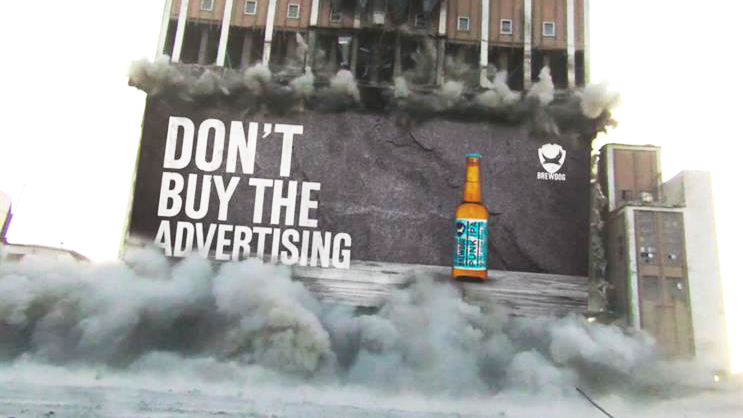
Brand demolition: Brewdog made plenty of decisions out of line with its stated values

It’s hard to read those lines now without wincing. Not just because they were clichés. But because they reveal how Brewdog’s internal brand champions were trying to do the right work while stuck in the wrong room.

That idea of winning the opportunity to be in the right room followed me through the first two decades of my career. As a political speechwriter, you learn quickly that you can argue over adverbs while the real decisions are being made down the hall. As an agency strategist, you can refine the story, sharpen the voice and polish the strategy deck while, elsewhere inside the organisation, choices that will profoundly shape the brand are being made in a language you and your communications toolkit don’t speak.

Because brand isn’t what marketing says. Brand is shaped by what an organisation repeatedly chooses to do. Especially when it would be easier, faster or more profitable to choose to do something else.

Take Brewdog. Whatever you think of the founders’ tone, their brand was built on a simple, potent proposition: sticking it to the man, restoring power to the people who love proper craft beer, and building something with a community rather than simply selling something to an audience. Brewdog, in short, was a punk, not simply as a posture, but as a position on power. And then, over time, the decisions stopped sounding like punk.

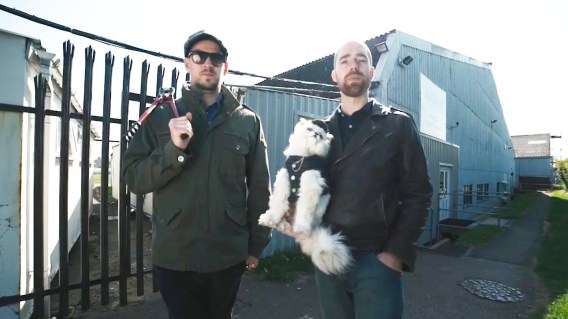
The author Matt Jones

Start with finance. Brewdog brought in private equity on terms that protected institutional investors first, while the brand continued to trade on the romance of “Equity for Punks”. The founders secured generational wealth. The “punks” were given a seat at the kids’ table. In the end, the term sheet told the truth the marketing couldn’t. When the business was sold, the punks were last in line.

Then there was the legal posturing. Having borrowed the language of a counter-cultural music scene that was never theirs to own, Brewdog threatened legal action against a pub seeking to use “Punk” in its name. When developing its Lone Wolf spirits line in 2017, they objected to a single Birmingham pub of the same name, only backing down after being publicly shamed for acting like a “multinational corporate machine”. Punk is more associated with receiving lawyers’ letters than sending them.

And then there were the commercial decisions. Brewdog has long claimed an uncompromising commitment to quality, refusing to play the cost-cutting games of the big brewers. Yet they collaborated with discount retailer Aldi on an exclusive custom product, lending craft credibility to the supermarket logic that has squeezed the craft category and the independent producers it once claimed to champion.

A finance decision. A legal decision. A commercial decision. Each one taken, one suspects, without the internal brand champions holding the pen. Each one choosing the easy path: more money, less risk, more distribution. Each one quietly re-writing what “punk” could possibly mean inside a business until it meant almost nothing.

Strategy implies choice, and brand strategy is no exception. Strategy is what you do, and equally what you refuse to do. A brand claim that never constrains your behaviour isn’t a positioning, it’s a costume. And if your refusals don’t cost you anything, then your strategy has no teeth.

In short, strategy without pain is just cosplay. And it seems Brewdog had been playing punk cosplay for years. The brand kept the rebellious language long after it stopped making rebellious decisions.

It’s worth contrasting that disconnect between Brewdog’s self-image and its decision-making realities with another business that has been in the news recently: Anthropic.

Anthropic used its Super Bowl airtime to make a simple, unusually constraining promise: Claude, its flagship large language model, would remain ad-free. Ad funding is one of the biggest levers available to platforms at scale. Publicly renouncing it was a choice that removed an entire future revenue lane for Anthropic.

Then came a second kind of constraint. Anthropic placed restrictions on certain US military and intelligence uses of its models (around autonomous weapons systems and mass surveillance). Its stance has led to serious pushback from the Pentagon and the prospect of losing government work worth hundreds of millions of dollars.

Whatever your view on the underlying politics, the brand signals are unmistakeable: this is a company willing to renounce enormous potential revenues and disappoint a powerful customer in order to preserve its boundaries and beliefs.

Anthropic Superbowl spots: Promised never to use ads

Add in Anthropic’s public Responsible Scaling Policy, an explicit commitment to guardrails that could slow down the deployment of new features and capabilities, and a clear pattern emerges. This is a business that doesn’t take the easy path. Far from maximising optionality, its recent decisions actively limit it, making choices that cost something: speed, revenue, distribution and scale. And that’s why they work as brand signals.

Claude’s “space to think” positioning isn’t being built in the marketing department alone. It’s being built, or at least being made credible, by executive decisions that constrain what the business will do, who it will sell to and how it will grow.

One of the great joys of co-founding Four Pillars Gin in 2013 was realising I no longer had to lobby to be in the room where the real decisions were made. Alongside my co-founders Stu and Cam, we were the room. If it mattered, we wrestled with it: product, operations, finance, investment, people, culture, safety, supply chain, design and storytelling. We drew no line between “business decisions” and “brand decisions” because there isn’t a line. We recognised that customers experience the whole system, so every decision was, in part, a brand decision.

As an industry, we keep talking about brand as if it lives and belongs in marketing. It doesn’t. Marketing can define a brand, articulate it, amplify it externally and advocate for it internally. But the brand itself is forged elsewhere; shaped by choices, trade-offs, products, priorities and (at times) pain.

The market will happily ignore your brand manifesto. It won’t ignore your redundancies, your term sheets, your pricing decisions or your product compromises. Sooner or later, every brand meets the reality of the decisions the business makes. And, when it comes to those decisions, the priority for me is the same as it was for Aaron Burr in the musical Hamilton, “I wanna be in the room where it happens”.

Get the latest media and marketing industry news (and views) direct to your inbox.

Sign up to the free Mumbrella newsletter now.

"*" indicates required fields


SUBSCRIBE

Sign up to our free daily update to get the latest in media and marketing.