
The future rarely shows up as advertised

Four Pillars co-founder and Mumbrella columnist Matt Jones notes that bold efforts to reinvent businesses based on technology alone almost never work as planned. The lesson for marketers and media people is to be aware of the successful by-product of the failed grand plan.
Exactly 17 years ago, I moved to New York City to become head of strategy at Jack Morton Worldwide’s “most important” office. Most important because of its place in the agency’s global network and because it had just been flattened by the first nine months of the GFC. As I got my feet under the desk (and sadly there were plenty of empty desks to choose from), two competing visions of the future were emerging across the US events industry.

One was anchored by a broad look at what was happening to attention in a world being transformed by technology (sound familiar?). Channels were multiplying, audiences were fragmenting and trust was getting harder to buy. Legacy 20th Century brands long used to renting eyeballs and selling fictions would have to learn how to earn both attention and trust.

So the opportunity was to take Jack Morton’s live event capabilities, historically anchored in B2B conferences and trade shows, and apply them to consumer-facing experiences that would build lasting brand equity. Following this thesis would involve an exciting pivot toward a world that was already arriving, but it would also challenge everything about how the agency currently operated.

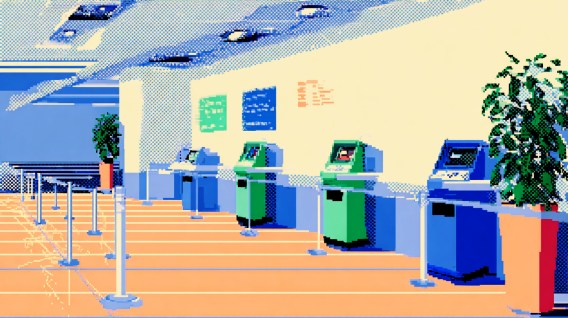
The other vision was more comforting and convenient, a disruption-lite paradigm that would be much easier to adapt to. It imagined the event industry’s traditional B2B strengths could be replicated and monetised in virtual reality, as if we were rebuilding the concept of trade shows inside a banal corporate version of Second Life. Think digital conference centres, digital lanyards and digital carpet. The future would be more of the same events, just lovingly recreated in procurement-friendly pixels.

The author Matt Jones

Back in 2009, event professionals weren’t wrong that the world would look to do more business online and travel less for meetings in the future. The mistake was thinking that the future would arrive in a form we would find familiar and convenient. Meanwhile the other future we talked about, the one that would prove far more challenging and inconvenient, was the one with the real creative and growth opportunities.

I think about that dichotomy often, and especially now as the AI-shaped future is once against being contested across the marketing and technology landscape. The problem is that the future being described is usually one that flatters whoever is doing the describing, confirming the rightness of their business model and helping their shareholders sleep better at night.

The Meta lesson

Of course, before everything was going to be artificially intelligent it was all going to be virtually real. So Meta’s announcement last week that it would shut down its virtual reality social platform Horizon Worlds (to allow it to focus more on its AI efforts) was a perfect example of the future taking a different shape to what was in the brochure.

For more than a decade, from Facebook’s acquisition of Oculus in 2014 onward, Meta poured staggering amounts of money into the idea that we would live richer lives inside a virtual world with education, entertainment, work, community and commerce all happening “in the metaverse”. Preferably one owned by Meta. But it turns out most people didn’t want to live in a new world (even part time). They just wanted the current one to work a bit better.

That’s why the interesting Meta story isn’t the loud closure of Horizon Worlds, but the quiet success of the by-product of all those efforts, their collaboration with eyewear giants EssilorLuxottica. Ray-Ban and Oakley Meta glasses don’t demand you enter a virtual universe. Instead, they add a smart, AI-powered overlay to the physical one, helping you capture, listen, translate, ask and share without a clunky device getting in the way. They augment real life seamlessly rather than replace it intrusively. And they sold 7m pairs last year, making them the first smart eyewear series to be adopted at mass-market scale.

Meta Ray-Ban Display glasses have a small AR overlay

The irony, of course, is that “slightly improved sunglasses” would never have justified a corporate rebrand or driven a bump in the Meta share price, even if they were something people actually wanted.

Once you see this pattern, this flaw in our personal narratives of change, you start seeing it everywhere. For years, Tesla’s vision has been underwritten by a heroic narrative about autonomy and the transformation of mobility. Maybe that future will arrive one day. In the meantime, the undeniable impact so far has been a by-product of that vision: the normalisation of electric vehicles, the scaling of battery technology and the building of charging infrastructure that eases our range anxiety. The world didn’t require fully automous self-driving cars to challenge the primacy of the internal combustion engine. We just needed electric cars to stop feeling like an impractical experiment.

NASA’s Apollo program fits the same shape. The moonshots were literal, dramatic and unforgettable. But we haven’t been back to the moon since 1972, and the enduring effect hasn’t been to make us a spacefaring civilisation. Instead, what have lasted are the by-products of NASA’s efforts: systems thinking, engineering discipline, manufacturing capabilities and new technologies. The politicians got their flag on the moon. The rest of us got to benefit from great leaps forward in scientific capability.

Nintendo rejects the technology trap

There’s one company that has quietly refused this entire genre of wishful future-making: Nintendo. I’ve just finished reading Keza MacDonald’s brilliant book Super Nintendo and the same theme returns again and again. While Nintendo has never been allergic to new technology, it refuses to see new technology as a substitute for its ambitions. So, while the rest of the industry is always searching for what’s next, Nintendo keeps returning to the same old brief: play, joy and the ability to make people smile. Nintendo adopts new technology, motion controls, portability and hybrid form factors, but only when it serves those timeless feelings.

Nintendo’s first great engineer, Gunpei Yokoi (the designer of the Gameboy, among other gaming landmarks), described his approach as “lateral thinking with withered technology”. It’s a brilliantly counter-intuitive philosophy in our newness-obsessed world, and it’s why Nintendo so often looks behind on the spec sheet while racing ahead in the culture. In short, Nintendo designs for joy, not for justifying an investment thesis or a technological whim.

Not all of us can be Nintendo, resisting the siren pull of new technology. It’s easier to buy into a vision of a boldly-imagined future that conveniently reinforces your biases and justifies your sunk costs. But the future rarely shows up as advertised. Instead, more commonly, the future we actually get is a by-product of ambition.

Matt Jones has an eclectic background, combining economics, politics, brand experience and gin. To read more, see the biographical note at the end of his first column for Mumbrella on why SXSW Sydney failed.

Get the latest media and marketing industry news (and views) direct to your inbox.

Sign up to the free Mumbrella newsletter now.

"*" indicates required fields


SUBSCRIBE

Sign up to our free daily update to get the latest in media and marketing.