
Trust in the media has risen over the past year: Edelman
Trust in the media among Australians has risen over the past twelve months, according to Edelman’s Trust Barometer.

The 26th annual Trust Barometer was based on 30-minute online interviews with a nationally representative sample of 1,200 respondents.

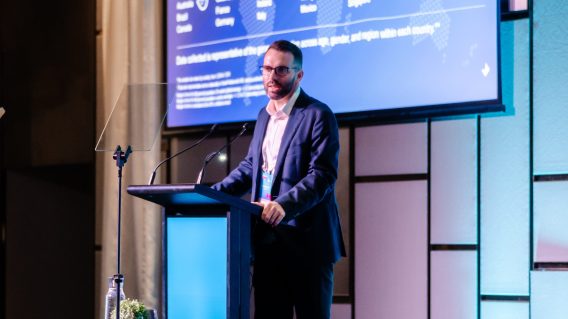
The 2026 report, launched at Mumbrella’s CommCon on Wednesday afternoon by Edelman Australia CEO Tom Robinson, found that trust in the media grew by 8%. This is a higher increase than trust in governments and businesses, which rose by 6% and 5%, respectively.

Overall trust increased from 49% in 2025 to 54% in 2026, which the report notes reflects a shift “from distrust to neutral.” Despite this, there is a 19% gap in trust between high and low-income earners, marking the biggest gap since surveys taken during the pandemic in 2021.

Just 22% of Australians believe the next generation will be better off, far fewer than the global average of 32%.

International conditions are weighing heavily on Australians, with 60% of Australians worried about trade and tariff issues impacting their work, and 54% concerned a looming recession will result in their job loss.

“Ultimately, these fears are causing consolidation in who we trust,” said Tom Robinson, CEO of Edelman Australia.

“There is a shift towards deeper trust in more localised sources including community and grassroots, and this is contributing towards a national retreat into a more insular mindset.”

To this end, Australians have become quite nationalistic about supporting local businesses. 44% of respondents support “reducing the number of foreign companies operating locally even if it meant higher prices”, a figure 10% higher than the global average.

Uncertain geo-political factors run the risk of tipping behaviour towards xenophobia. Alarmingly, 73% of the nation has what Edelman terms an “insular” mindset, which means they are “unwilling or hesitant to trust someone who lives by different core values or beliefs, wants to address societal problems differently, or is from a different culture, background or lifestyle to them.”

The uncertain economic situation is causing a lack of optimism in Australia (Mumbrella)

This is impacting Australian workplaces. 42% admit they would rather change departments than report to a manager “who holds different values”, and a third admit they would put less effort into projects run by work colleagues “with different political beliefs”.

“These divisions create clear challenges for institutions, as the population sees the leaders of these sector leaders who are different to them as particularly distrusted,” Robinson said.

“There is a correlation between insularity and a sense of grievance against businesses, governments, media, and the rich.”

Robinson says the “good news” is that 74% of Australians agree the current levels of mutual distrust is either a moderate or crisis-level problem.

“Usually when we think about addressing divides, we try to eliminate differences,” he said.

“However, in trying to navigate a world populated by insular groups, we need to be willing and able to work across these differences. This involves surfacing common interests, translating perspectives, and creating conditions for co-operation without requiring agreement.”

He said the media’s role in mending this disconnect should be in “de-escalating tensions and making space for different viewpoints”, while businesses should aim to “bring people together to create dialogue across difference, and to provide this support across income groups.”

Get the latest media and marketing industry news (and views) direct to your inbox.

Sign up to the free Mumbrella newsletter now.

"*" indicates required fields


SUBSCRIBE

Sign up to our free daily update to get the latest in media and marketing.