
Why I broke up with ChatGPT – and why you should too 

Following backlash around the alleged use of ChatGPT by the writers of Stranger Things, freelance marketing communications consultant Brooke Hemphill reflects on her decision to ditch the chatbot. 
Last year, I wrote a piece for this esteemed publication lamenting the blatant use of ChatGPT in, well, everything. Embarrassingly, I started the piece professing my love for the chatbot. Eight months on, it’s fair to say our relationship has soured.  

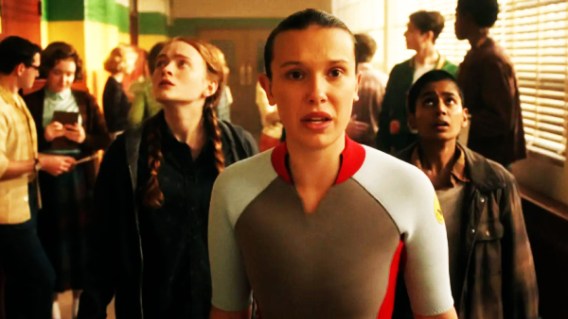
The backlash around alleged use of the tool in the final season of Stranger Things has only cemented my feelings.  

In case you missed it, a Netflix documentary chronicling the making of the final season of the hit show featured a shot of one of the Duffer brothers, the show’s creators, allegedly writing with ChatGPT tabs open on his laptop.  

Fans who felt disappointed by the final season quickly took to social media to suggest involvement of the notorious chatbot could be why it kinda sucked.  

Diehard fans sounded off with comments like: “There were multiple times throughout Season 5 where I said out loud: ‘That dialogue sounds just like GPT’.” 

It’s a wake-up call to anyone who has dabbled with AI in their writing.  

Over here in our adland bubble, AI and ChatGPT loom large. As lovers of shiny new toys, we were all quick to jump on the bandwagon. Myself included. But now that the sheen has worn off and everyone from your mum to your GP is using it, perhaps it’s time for a rethink. 

My own personal wake-up call came in two parts: the first during a joke writing course, when I had an overwhelming urge to fire up ChatGPT instead of using my imagination to brainstorm punchlines.  

The second part was thanks to this article from writer Audrey Knox. In it, Knox points out that while tools like ChatGPT might speed up the writing process, for people who actually care about writing, what activity would they then get to spend more time doing? “The dishes?” Knox asks. “Scrolling social media? Drinking? What the fuck are you talking about?”  

As another Stranger Things fan noted, “If you are a writer, don’t you take pride in the work you do? Why would you let a moronic glorified chatbot into the thing you are skilled at and valued for?” 

After reading Knox’s post, I promptly deleted my account and went cold turkey. I haven’t touched it since. Not for writing, not for health advice and sure as shit not for therapy. The 43,000 weekly visitors to the TherapyGPT Reddit thread terrify the hell out of me. 

I’m out. But if you’re still calling on it to assist with your writing, here are some reasons why you might want to reconsider.  

The theft of it all 

While the existential threat of tech companies hoovering up Aussie content carte blanche passed in October last year, we mustn’t forget the swathes of information Large Language Models (LLMs) gobbled up before anyone was aware.  

Anthropic, the company behind AI tool Claude, agreed to fork out $1.5 billion dollars last year to settle a class action lawsuit with authors of an estimated 500,000 books it used to train models without consent. OpenAI, the folks responsible for ChatGPT, could be on the hook for a similar payout. Heck, even Meta has had a crack at it, feeding its AI a trove of pirated books. 

In the din of all the other horrible shit AI is now responsible for – hello, Grok’s nudification tool – it’s easy to forget LLMs are built on a foundation of theft. Consider this a friendly reminder. 

It’s not authentic 

In the throes of my brief love affair with ChatGPT, I experienced the thrill of typing a prompt and having it spit out something surprisingly clever – usually preceded by an hour of complete garbage. I even slapped my thigh and chortled once when it delivered a solid gold banger.  

But no matter how witty-sounding it was, I didn’t come up with it. I could put it into my writing, but every time I saw it, I’d know. 

Maybe for you, writing is a chore or a professional necessity, so it doesn’t bother you to use the words of the bot. But it will always lack authenticity. And just like the viewers of Stranger Things, people will feel it. 

It’s making you dumb 

Following my brain freeze during that joke-writing class, I noticed something alarming: instead of collecting my thoughts for projects I was writing, I was forming prompts in my head. The brain rot was setting in. And I wasn’t alone.  

This Swiss study found a correlation between regular AI use and lower critical-thinking skills. Likewise, a Microsoft and Carnegie Mellon University study found that using AI fosters long-term over-reliance on the technology.  

Imagine what the long-term impacts on brain health will be? Early-onset dementia, anyone?  

Nobody wants to read AI slop  

The growing backlash toward AI slop is only getting louder. 

I recently applied for a writing grant. The final question on the form: had AI been used to write the application? Similarly, last year, one of my clients was asked to disclose the use of AI in an opinion piece he wrote for an international marketing publication.  

If you’re using ChatGPT to churn out thought leadership pieces and whatever else, be prepared for the day to come when your submission is questioned, if not rejected entirely. 

But why wait for that? Why not stop now?  

Since I had my come-to-Jesus moment, I’ve gone analogue. My trusty notebook and pen are never far away. This piece? Besides Grammarly spell check, came entirely from my brain. Just as all of my writing did for the 20-odd years I was attempting to string words together before LLMs inserted themselves into our lives. 

In a world where everyone is using ChatGPT and everything is starting to sound the same, not using it has become a competitive advantage.  

No one can think like you. Ergo, no one can write like you. So why not embrace it? 


Get the latest media and marketing industry news (and views) direct to your inbox.

Sign up to the free Mumbrella newsletter now.

"*" indicates required fields


SUBSCRIBE

Sign up to our free daily update to get the latest in media and marketing.