
Split screen: Allbirds crash lands as Koala takes flight
The direct-to-consumer (DTC) revolution disrupted traditional retail and set the standards it must now compete against. Here Four Pillars co-founder Matt Jones takes us through the DTC brand journey using the experience of a failure (Allbirds) and a success (Koala) to illustrate his points. One big question is whether the now-publicly traded Koala can maintain its edge.
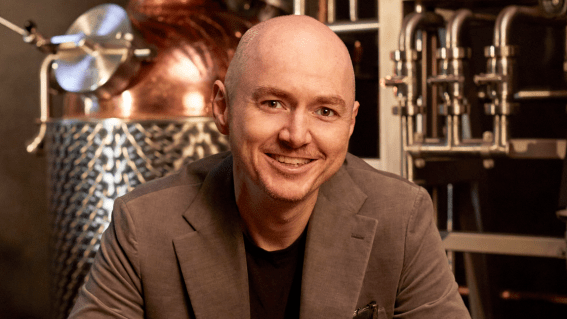
The author Matt Jones
I was there when it happened. By “there” I mean living in New York City. And by “it” I mean the dawn of the millennial DTC boom, when Warby Parker launched its disruptive eyewear business. It was February 2010, the same month my daughter was born. She’s 16 now, approaching adulthood at speed. Warby Parker and its 2010s DTC peers are all approaching their own milestones too.
A couple of those milestones showed up last week, as Koala launched on the ASX and the once mighty Allbirds crashed down to earth. But I’m getting ahead of myself. It’s 2010, we’re still counting my daughter’s age in days, Warby Parker has just launched, and woollen Tree Runner sneakers and mattresses in boxes promoted through provocative OOH advertising are still just a twinkle in the eye.
Warby Parker was founded by four MBA students and arrived with an East Coast preppy confidence that made it feel instantly relevant and authoritative. Vogue and GQ wrote about it back when prestige print still moved the needle. It crafted a stylish digital experience. It built a sizeable customer database at speed. It staged stunts in the New York Public Library. It partnered with brands tastefully. And it made buying a pair of prescription glasses feel like participating in culture rather than an overpriced clinical transaction. But the cleverest part of Warby Parker’s model wasn’t the aesthetics or the brand building. It was the way they engineered product confidence.
Because the hardest problem to solve in those early DTC categories wasn’t desire. Desire was relatively straightforward. These new brands were born native to a digital and social-first world of millennial aesthetics. From Warby Parker to Away (luggage), Casper (mattresses) and Everlane (apparel), everything looked cooler than the incumbents. The photography was better. The storytelling was more engaging. The partnerships and activations were culturally savvy. The brands looked, sounded and acted like they were made by people who actually lived in the decade they were selling into.

The confidence trick

Making them want it is the easy bit (Casper)
Product confidence was the harder bit. When you removed traditional retail you removed the places people habitually went to touch, compare, be reassured and outsource their anxiety to experts (or, more realistically, salespeople pretending to be experts). So Warby Parker launched with an innovative home try-on program. Casper offered months-long mattress trials. The whole category learned to manufacture product confidence without physical shop floors. In many ways these DTC pioneers brought behavioural economics into the world of brand building, not just muted colour palettes of soft pinks and warm greys.
It all felt new. And to some extent it was. But only partly. Because millennial DTC brands weren’t the first to crack the idea of selling through a screen. That credit belonged to home shopping channels like QVC, who had long mastered the art of selling kitchen appliances and cleaning products to sleep-deprived viewers at 2am.
What Warby Parker and its millennial cohort helped ignite wasn’t direct selling. It was the ability to do direct selling and meaningful brand building at the same time. It was about blending identity, desire and trust into a single playbook. And once that playbook was established, it jumped product categories and international borders at speed.
In eyewear, while Americans had Warby Parker, the French had Jimmy Fairly, and Australians could choose between Oscar Wylee and Bailey Nelson. In mattresses, shoppers no longer had to walk into a fluorescent showroom and be sold “mattress science” by someone with the credibility of a used-car salesman. They could buy a mattress in a box online from Casper in the US, Eve in the UK, and Sleeping Duck or Koala in Australia.

Will Koala’s marketing smarts survive the switch to public ownership? (Mumbrella)
In apparel, Everlane used radical transparency to turn basic sweatshirts into a cultural stance. In luggage, Away in the US, Monos in Canada and July in Australia all offered premium design at DTC prices. And in footwear, Allbirds made a simple wool sneaker into a symbol of restrained taste and confident comfort.
The millennial DTC boom wasn’t just powered by better websites and social media savvy. It was enabled by shoppers’ vivid memories of the miserable “before times”. These were categories ripe for disruption, where retail stores were rarely brand-building environments. DTC didn’t just remove the middleman. It also removed the misery.
The new world, again
But now the world has changed, in many ways because these brands changed it. Retail has improved. The novelty of these millennial DTC pioneers has worn off. The cost of attention has risen and the cost of logistics has risen too. Legacy brands and retailers have learned new tricks. And the advantage of simply being the bright new thing has become harder to sustain in the facing of changing demographics, economics, aesthetics and values.
Last week offered us a neat split-screen moment. In Australia, Koala listed on the ASX and took flight. Across the Pacific, Allbirds came crashing down. Same era, subtly different playbooks, wildly different outcomes. Koala listed at an implied valuation of over A$300m. Allbirds, once valued over US$4 billion at its peak, agreed to sell its assets for US$39 million, reportedly less than the value of its inventory. So what caused the bird to crash land? And what can Koala, and the rest of us who are in the business of building brands, learn from the impact?
Allbirds began with something close to single-minded perfection: an iconic product, a clean narrative, sustainable materials, extreme comfort and an aesthetic that signalled the quietest of good taste. A pair of Allbirds woollen sneakers became part of the Silicon Valley uniform, an iPhone for your feet. Desire, taste, identity and belonging rolled into one.

Nice marketing: But Allbirds lost focus under public ownership (Allbirds)
But when it listed on the NASDAQ in 2021, the market didn’t just buy the shoe. It bought a prediction, betting that the brand could expand, repeat its intial trick and endure beyond the immediate cultural moment it was born into. That’s what got priced into the valuation. And, once priced in, the market’s growth expectations can be relentless.
So Allbirds tried to widen its story: opening more stores, launching apparel ranges and diluting its single-mindedness. But its growth never matched its ambition, and the brand’s simplicity didn’t survive the stretch. Allbirds had built a brand for a product and a moment, but it couldn’t turn its narrow product-led brand or its momentary aesthetic into a scalable long-term growth platform.
Two kinds of gravity
That’s the adulthood trap for this whole cohort. When a disruptor lists, it accepts that growth becomes everything. And growth comes bundled with two kinds of gravity.
The first is category gravity. Early adopting consumers are drawn to new ideas and new models. They embrace risk and difference. The mass middle, by contrast, is drawn instead to the reassurance of familiar brands and big box retailers. So the more you scale, the more you are pulled back toward category norms, mental availability, physical presence and familiar distribution channels. I saw this at Four Pillars. We could hit our early targets through direct sales, small bars and independent bottle shops. But our bigger ambitions eventually required our brand to perform just as well in Dan Murphy’s, BWS and Liquorland. Navigating this new gravity while maintaining your original brand integrity and momentum is the hardest of balancing acts.
The second is investor gravity. Listed companies are rewarded for predictability. Markets like repeatable levers and proven playbooks. They are not inclined to reward constant experimentation, cultural stunts or adventurous risk-taking. We never had to wrestle with that second gravitational pull at Four Pillars because we chose to partner with Lion rather than go public. But that’s exactly what Koala have now chosen.
So will Koala soar? It depends on how it navigates those forces. What’s not in doubt is that Koala now has a second audience. While its customers may value delight, the markets will value profit delivery. While its early adopters appreciated its irreverence, its growth customers will seek greater reassurance. And while its social community enjoys its brand personality, its investors will be more hard-headed.
The millennial DTC class of the 2010s proved something important: you can create desire and confidence at the same time, and brands can be built through acts of direct selling and experience delivery, not just advertising and third-party distribution. The question now is what happens when those brands have to keep growing in public, under the weight of expectations they can’t fully control.
Because, for people and brands alike, adulthood is the moment the world stops marvelling at your early promise and starts judging you purely on your performance.
Matt Jones has an eclectic background, combining economics, politics, brand experience and gin. To read more, see the biographical note at the end of his first column for Mumbrella on why SXSW Sydney failed.
Really interesting, but I’m wondering if this reads less like a brand story and more like a coordination shift. Perhaps the question here isn’t why Allbirds fell: it’s whether that part of the market still exists.
The middle isn’t just getting squeezed—it’s losing its function. DTC brands sat in a layer that aggregated demand and transferred trust. Platforms made aggregation cheap. Networks are now making trust cheap. Once both functions can be performed elsewhere, the old mid-market role (“good quality at a fair price”) doesn’t have much left to do.
What’s left is a commodity floor and a set of relationship-driven overlays. Everything that lived in between starts to look unstable. This feel less like a split-screen and more like a quietly disappearing category.